Daily English for Long Mynd and Hawkstone

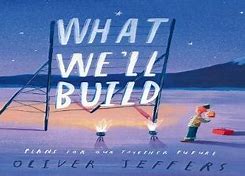
Please listen to the story again, today is the last lesson on the book, ‘What we’ll build’. The task is to design your own dream home. You will need to think of the questions below, plan and draw. You could even try and build your dream home out of items you have available.  See the image below of the house from the book. I have added some questions to make you think.

See ideas below:

How many bedrooms?

How many bathrooms?

Front garden and/or drive way?

Back garden?

Are the windows double glazed?

How many floors are there?

Does your house have a loft?

Materials it is made from:

Who has this house been designed for?

What is unique about your house?

dream home

house design


Click images below to enlarge – examples of dream homes.

Please complete a book review below:

book review

Daily English for Long Mynd and Hawkstone

Over the last two weeks our English lessons have been all based on the story ‘What we’ll build.

Today your task is to write a fact file all about Oliver Jeffers, the author of the book.
Have a think! Where does he come from? What made him want to become an author ? What other books has he written? Can you draw him ? (see the picture above)

We would like you either to create a PowerPoint( if you have a computer )where each slide is a different feature of the author or write a book review about the book we have been reading.

Think about why you liked the book? What was your favourite part ? Which was your favourite illustration?

If you don’t have access to a computer, please create a fact file full of interesting research you have found all about Oliver Jeffers and his background on a piece of paper or using the template below.

Remember to use capital letters, full stops and finger spaces between your words.


Author Fact File author

Please do not hesitate to ask any questions and we look forward to reading your Author study.

Many thanks

Miss Kerr and Miss Hutson


Daily Maths for Long Mynd and Hawkstone

Long Mynd

Aut3.7.3 – Subtract a 2-digit number from a 3-digit number – crossing 10 or 100 from White Rose Maths on Vimeo.

Worksheet

True or False

HINT:Remember to explain your reasoning and problem solving by using the STEM sentence openers.

Hawkstone

Powerpoint

Please go through the PowerPoint for todays tasks

Aut4.11.5-6-times-table-and-division-facts (1)

Worksheet

Many thanks as always

Miss Kerr and Miss Hutson

French – Long Mynd and Hawkstone

PE –
Please log into ‘TWWG’ PE channel for the next PE session with Callum.


Todays lesson is all about French animals.

Please go through the Powerpoint and work through the worksheet provided.

t-tp-5909-french-animal-powerpoint-_ver_6 (1)

Have a go at telling us what pets you have at home or which animal you would like to own.

French-Activity-Sheet-As-Tu-Un-Animal (1)

Once you have finished the worksheet please draw your favourite animal/animals and label them using the English and French word.


Any questions please do not hesitate to ask.

Many thanks

Miss Kerr and Miss Hutson


Daily Maths for Long Mynd and Hawkstone

Long Mynd

Aut3.7.2 – Add 2-digit and 3-digit numbers – crossing 10 or 100 from White Rose Maths on Vimeo.

Worksheet

True and False

HINT:Remember to explain your reasoning and problem solving by using the STEM sentence openers.

Hawkstone

Aut4.11.4 – Multiply and divide by 6 from White Rose Maths on Vimeo.

Worksheet

True or False

HINT:Remember to explain your reasoning and problem solving by using the STEM sentence openers.


Daily English for Long Mynd and Hawkstone


Listen to the story again.

Look at the illustration below and imagine this is a door to your favourite place.

Have a think :- Where is your favourite place? Why is it your favourite place? How does it make you feel when you there?

Today we would like you write a paragraph describing your favourite place.  Remember to use  full stops, capital letters and focus on adding expanded noun phases within your work.


See the example below:-

My favourite place is at the seaside. The frothy, blue-green salt water crashes into the setting sun reflected shoreline in waves. It makes me feel calm and relaxed when sitting on the soft, shimmering sand.

Please find the link to the worksheet below.

Worksheet

Please send you work as always via class Dojo or the class email.

Any questions please don’t hesitate to ask

Many thanks

Miss Kerr and Miss Hutson


PE and Art- Long Mynd and Hawkstone

PE –
Please log into ‘TWWG’ PE channel for the next PE session with Callum.


Today I would like you to have a go at a cloud art picture . There are many different types of clouds and we thought it would nice for you to make a representation of these.

different-types-of-clouds-powerpoint

Work your way through the powerpoint and familiarise yourself we the different cloud types.

Then we would like you to have a go at recreating the piece of art work below.

Please label each cloud and write a sentence describing each cloud.

If you haven’t got cotton wool as an alternative you could use newspaper or toilet roll to make your clouds.


If you finish this activity we would like you to have a go at another piece of cloud art.  Using paint or crayons paint either one or a variety of the different clouds you have learnt about today .


As always, any questions we are happy to answer them.

Many thanks

Miss Kerr and Miss Hutson



Daily English for Long Mynd and Hawkstone

SPACE POETRY

Please listen to the story again.

Your task today is to write a poem linked to the below image. Please click to enlarge.

TASK:

Think about what you can see? How does it make you feel? What sounds may you hear? How you might get there? Look at the pictures and use the illustrations.

See sheet space poetry 1

Poem types:

  • Rhyming poem
  • Acrostic poem
  • Shape poem (Concrete) – you can choose your own title, E.G SPACE, ROCKET, PLANETS, GALAXIES  ETC

Poem examples –

Once completed please draw an image to accompany your poem. Please don’t hesitate to contact myself or Miss Kerr is you are unsure of the task

Junk modelling Noah’s Ark

For Today’s lesson you will be making your own Noah’s ark using resources from your house (junk modelling). Please watch the video below for an example of one of the tasks we are setting.

TASK:1

Task 2: Junk model Noah’s Ark

What is buoyancy?

Next watch the BBC Bitesize video clip (which also features a game)

https://www.bbc.co.uk/bitesize/topics/z4qtvcw/articles/zytqj6f –

Evaluation

Now try your Noah’s Ark home-made boat in the bath:

BIG QUESTIONS:

  1. DOES IT SINK?
  2. IF SO, WHY DO YOU THINK IT SANK?
  3. DID IT FLOAT?
  4. WHAT MADE IT A GOOD BOAT?
  5. WHAT WOULD YOU IMPROVE NEXT TIME?

Please send pictures of the before and after the experiment. But no photos of you in the bath.

Floating and sinking

When something is in water, there are two forces acting on it. Its weight and the force of the water pushing up, the upthrust.

If the weight is equal to or less than the upthrust, it floats. Things that float are buoyant.

If the weight is greater than the upthrust, it sinks.