Home Learning – Art Lesson Desert Doodles

In today’s lesson we are inspired by an artist who loves to doodle on everything, Sam Cox.

Cass Art Interview | Sam Cox (The Doodle Man) - Pick up a pen and ...

You don’t have to copy the drawings exactly, for this lesson if you want to change the desert images or the colours that’s fine, it is your art!

The Kooky Drawings of Sam Cox | Scene360

If you don’t have the same resources as the artist at home don’t worry, just use what you have. You could even try and make your own for this lesson.

The Doodle Man: Artist interview with Sam Cox | Cass Art

I hope you have fun drawing or painting along.

Maths Home Learning 20th May 2020

Unit and non-unit fractions

Did you know that there are different types of fractions?

The two types that we are looking at are called unit fractions and non-unit fractions. Both unit and non-unit fractions show us how much of the whole we are talking about.

Teacher fractions

A unit fraction is a fraction where the numerator (the number on the top of the fraction) is 1. The denominator (on the bottom) can be any other whole number. A good way to remember it is by remembering that unit means 1!

Here are some examples of unit fractions: ½, ¼ and ¹⁄₁₀

Can you think of any other unit fractions?

A non-unit fraction is a fraction where the numerator is greater than 1. The denominator can be any whole number.

Here are some examples of non-unit fractions: ⅖, ⁷⁄₁₂ and ¾

Can you think of any other non-unit fractions?

Example 1

Emma and Sophie shared a pizza that was cut into 6 pieces. Sophie ate ⅙ of the pizza and Emma ate ⅚ of the pizza.

Which of these two fractions is the non-unit fraction?

Look carefully at the numerators. If it’s a non-unit fraction, we’re looking for a number that isn’t 1, so ⅚ is the non-unit fraction. That means ⅙ is a unit fraction.

Pizza cut into sixths

Example 2

Take a look at this rectangle that has been split into 10. Some of the squares are different colours.

  • ¹⁄₁₀ squares is yellow.
  • ⁴⁄₁₀ squares are blue.
  • ⁵⁄₁₀ squares are red.

Which colour represents a unit fraction?

Let’s look at the numerators. Remember, unit means 1 so look for the fraction that has 1 as the numerator.

Yellow represents the unit fraction since it is ¹⁄₁₀ of the rectangle.

Visit the BBC Bitesize website to see the activities.

Challenge

Home Learning – Wednesday 20th May

Good Morning!

You made some incredible potions yesterday! I saw all sorts of ingredients! As a witch or a wizard, no potion is complete with out a spell! Now your spell needs to rhyme.

Start it off with one of the magical phrases, then add a a rhyming line. Darcie already made hers up and it’s a perfect example! It goes:

Bippity boppity boo.
Make all your dreams come true!

Now if you wanted to make your spell even more powerful, you can add some more by using another magical phrase!

I’d love for you to write your spells down and decorate them so that they are beautiful and we can remember them!

Here are the magical phrases:

Bippity boppity boo

Abracadabra

Hocus Pocus

Bin ban ben

Flippy floppy flee

If you can think of your own magical phrase, that’s absolutely fine too!

Reception Maths:

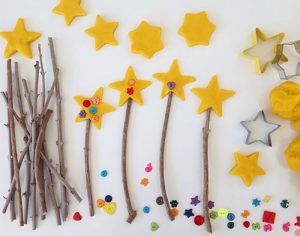
Today I would like you to do some measuring. Adults, I would like you to cut some strips of paper to different lengths to make different sized “wands”. Firstly, ask your child to put them in order from longest to shortest. Then try measuring them with a small object. This can be beads, cubes, lego bricks, or anything else that is small.

Pick three wands that are different lengths. Measure them and then compare them. Which one is the longest?

Which is the shortest?

How much longer is the the longer one?

Year 1: BBC Bitesize

Extra crafty activities

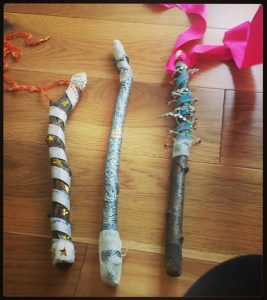
Make your very own wand – 
 

Make a bubble wand:



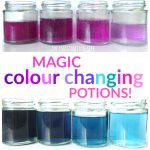
Colour changing potions:


Hopefully it’ll be a lovely sunny day today so don’t forget to wear a hat and plenty of suncream! Have fun!


Wednesday – ICT

I have set three activities for you to do using Purple Mash. Follow this link, log in using the username and passwords you have, and access the ‘to do’s’ section. You can then save the work in your child’s folder and I will be able to see what they have done. https://www.purplemash.com/?utm_campaign=11544511_Purple%20Mash%20-%20Week%209%20-%20Weekly%20Activities&utm_medium=dotdigital&utm_source=2Simple%20Software&utm_Link_Name=Weekly%20Activities&dm_i=R2J,6VFSV,T7GZVS,RL462,1#todos 

Wednesday Literacy

Today I’d like your child to read a bug club book to you. Follow this link to login.

https://www.activelearnprimary.co.uk/login?e=-1&c=0

All details needed are on the inside of your child’s blue reading diary. A reminder that the password has been changed to 12345. All other details are the same.

Recap reading the tricky words with your child using your flash cards.

Look at this picture and discuss it with your child. Ask your child to write as many sentences as they can about it. Remind them to use capital letters, finger spaces and full stops. Ask them to sound out the words carefully and rremeber to use their tricky words.


Wednesday Maths

Today you are going to work on adding by counting on. Look at these slides, talk about them with your child. You can use the number line on the slide, or it may be easier to use a paper number line.

Use this slide to talk about list writing. Discuss how the words are listed one on top of the other instead of in a sentence. Recap on ordinal numbers by asking your child what is at the top of the list, and so what will we buy at the shop first? What will we by second, third etc? What is the last item on the list?

The first thing to buy is crayons. Can they find a number on the box to tell them how many are inside? There are 8. Can they find this on the number line? They are also buying 2 more crayons. Ask them to start at 8 and do two finger jumps to show they are buying 8 + 2 crayons. What number do they land on? Reinforce this verbally by saying 8 + 2 = 10.


How many apples are in the basket? Find this on the number line. How many more apples are you going to buy? Finger jump two numbers. What number do you land on? So how many apples have you bought in total? 5 + 2 = 7.
Repeat this process with the next few slides.

Here are two printable worksheets to support what you have been working on today. One uses numbers to 10, the other numbers to 20. I have also added photos of the worksheets so you can copy them out if you are not able to print them off.

addition by counting on to 10

addition by counting on to 20


Tuesday – Spelling Day for Stiperstones 19/5/20

Good morning

Today is spelling day! Well done for yesterday’s maths work. Looked like you are all remembering 1KM= 1000m

Today’s maths Year-5-Summer-Block-4-Step-2-PPT-Millimetres-and-Millilitres

Year-5-Summer-Block-4-Step-2-VF-Millimetres-and-Millilitres

English – spellings –Week 5 Word Search

Week 5 Cursive Handwriting Practice Sheet

Topic -There is a good couple of clips that Bitsize have been using this week that I would like you to watch please. https://www.bbc.co.uk/bitesize/articles/zdj8wty 

Once you have watched the clips you can try the activity on putting events in Henry’s life into the correct order.

You can then take a quiz on Henry V111’s life.

Finally make sure you have finished off the comprehension sheets about Henry V111 please.


Have a great day. I think Mr Hughes has set another art challenge for you to look at as well.

Stay safe xx


English Home Learning 19th May 2020

Using Formal and Informal Language

Formal language is used when we are communicating with people we don’t know very well and want to impress or show respect to. For example, police officers or head teachers.

Informal language is used when we are more relaxed and with people we know well.

For example:

  • Think about how you would answer your best friend if they asked you what you did at the weekend.
  • Now think about how you would answer the same question if your head teacher asked you instead.
  • How would each answer be different?
 We often use formal language when we write. However, there are times where writing can be informal, like when we’re writing texts messages, emails, postcards or letters to friends.

We use informal language more when we speak, but there are also times where it is expected that we speak formally. For example, in a classroom presentation or when meeting someone new.

Visit the BBC Bitesize page to see the video and activities where you can practise using formal and informal language.

CEOP
Parent View - Give Ofsted your view on your child's school
© Holy Trinity CE Primary Academy and Nursery 2026
Shropshire web design by kiskadoo