PSHE and Mindfulness

Hand Washing

With the possibility of schools reopening and lockdown restrictions easing I thought it a good opportunity to share again the song we used in class to help your child to wash their hands.

Here is a picture to help too.

Be still and quiet

The world is a confusing and possibly scary place at the moment. Take some time to slow down and be quiet and calm with your child. Encourage them to lay on their backs with their eyes closed. Encourage them to listen to all the different sounds they can hear. They would probably love it if you lay down next to them and joined in! If possible this activity could be completed inside and outside. You could then discuss the difference in sounds heard. Did you hear any of the same sounds as Mr Bear from the Literacy story today?

Friday Maths


Start by asking your child to join in with this song.

Today, if possible I’d like you to play a board game with your child that involves counting. Focus on taking turns and counting carefully.

If you do not have a board game that is suitable, use your number cards. Play a game where you take it in turns with your child to turn a card over and challenge the other person to do that many actions. For example if your child turns over a 4 you might challenge them to do 4 star jumps. If you turn over a 10, they might challenge you to clap your hands 10 times.

Here are some links to some online maths games your child might enjoy playing.

https://www.themathsfactor.com/games/try/?gameid=46&prefix=ZONE&config=IPG_CM_Y1_CA_001,%20support&title=Count%20the%20Yeti%201%20to%2010 

https://www.topmarks.co.uk/addition/addition-to-10

https://www.bbc.co.uk/cbeebies/topics/numeracy 


Friday Literacy

If you accessed the additional ideas  for art and science yesterday, you may have watched the video about Owl Babies and talked about day and night. Today’s literacy story is also set at night time. It is written by Jill Murphy and is called ‘Peace at Last’

Poor Mr Bear had a very noisy night. Discuss with your child some of the noises that kept him awake. Ask your child to wrote down some of these noises. They can choose to write them in sentences, for example ‘The clock kept Mr Bear awake.’ or they can write them as a list.

Thursday 21st May – Home Learning – Stiperstones

Good morning Stiperstones!

Maths this morning.Year-5-Summer-Block-4-Step-5-PPT-Converting-Units-of-Time

Maths sheets Year-5-Summer-Block-4-Step-5-VF-Converting-Units-of-Time

English – Using alliteration and onomatopoeia in a setting description.

https://www.bbc.co.uk/bitesize/articles/zn26hbk

Today – We are going to do a bit more Science.

I would like you to dissect a flower today and match it to the parts of a flower on your sheet. I will attach the sheet again on here again for you.Please make sure you label your parts of your real flower.

Activity Sheet Parts of a Flower

English Home Learning 21st May 2020

Creating a formal report

Reports are informative pieces of writing that give information to the reader about a certain topic. For example: space, the bald eagle, Scotland, flags of the world or anything else you’re interested in.

Report rules

  • All the information must be about the same topic.

  • You should provide the audience with lots of facts and evidence rather than personal opinions.

  • Reports must be set out clearly with a title, introduction, paragraphs, subheadings and images. (Subheadings are little titles for each paragraph, or group of paragraphs, to explain what they are about.)

  • They should be written in a formal tone (like how you would speak to your head teacher).

  • They should be written in the present tense (as if the actions are happening now).

    Follow the BBC Bitesize link to see the videos and activities where you can learn how write your own report. I would love to read a report you’ve written about something you’re interested in! 

Cloud Spotting!

With the weather outside I thought this would be a great opportunity to spend some time looking up at the clouds above us!

What You’ll Need: 
  • A blue sky with clouds.
  • An open, comfortable space to lie.
  • A rug or equivalent to lie on if the ground is damp.
  • Alternatively a seat by a window, where you can comfortably relax.
Instructions 
  1. Choose a day when you will be relaxed lying on the ground looking up at the sky.
  2. Find a comfortable spot. In the garden or by a window.
  3. Look at the clouds in the sky.

Task 1: Verbal Literacy: Describe what you can you see? Can you see a unicorn? Can you see a fairy-tale castle? Can you see a whale or a dolphin? What do the clouds make you think of? Are there any patterns or shapes you can see? Use your imagination. You could also take a picture of what you see.
Looking up will never be the same again: Cloudspotting for ...
Task 2: Write a short story about the different things you can see amongst the clouds? Observe the clouds for a while and start to think about what adjectives best describe the clouds. What creative story could you write about to explain what is happening up there in the sky? I have attached an information e-book to help you learn about types of clouds. You could add some of these facts to your story and descriptions to show your new understanding of clouds.

Read about the different clouds in the cloud spotting guide here. Or here t2-g-2567180-clouds-ebook-english_ver_2

You can even get a bit crafty! Look at the picture below for some inspiration!


Thursday – Art and Science (Owl Babies Animation)

Create some art work showing the difference bewteen day and night. Here are some ideas to inspire you.


Day And Night Craft For Kids - Sun And Moon Printable  


Watch this lovely animation of the story ‘Owl Babies’.

https://vimeo.com/55971653

Talk about the fact that the owls are awake at night time. This is because they are nocturnal. Nocturnal animals are awake at night time. They sleep in the day time. Can your child think of any other nocturnal animals. (For example, hedgehogs, foxes, bats, cats, badgers).


Thursday Maths and Literacy.

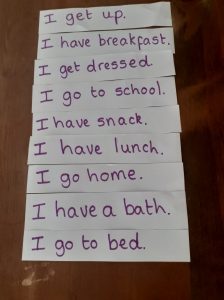
Today I’d like you to work with your child to sequence things that they do throughout the day. This covers the Reception Maths requirement to ‘Use everyday language to talk about time’.

Talk about these pictures first. What is happening in each one? They are showing a typical routine your child may have had before lockdown. Which does your child do first in the morning? Then what? Continue discussing both the pictures and your child’s routine right through until bedtime.
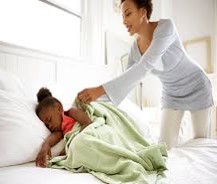
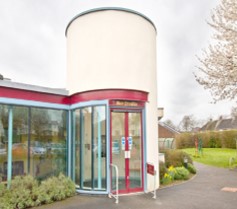
Help your child to write a simple sentence about each picture, on separate pieces of paper.
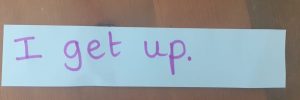
If you have developed your own new ‘lockdown’ routine you can use this. Please discuss this and help your child write it out in simple sentences on seperate pieces of paper.

Ask your child to read and sequence the sentences. It should look similar to this.
 

Maths Home Learning 21st May 2020

Tenths

Carrying on with fractions we’re now looking at tenths (1/10)!

One Tenth As A Decimal | Tenth Fractions | DK Find Out

As you can see in the picture, each shape has 10 equal pieces and 1 piece is coloured in. So 1/10 is coloured. This is known as a tenth.

Can you work out what the fraction for this shape would be?

Tenths Fraction Chart: Words and Numbers

Follow the link to the BBC Bitesize page to see the video and activities to practise tenths.

Challenge

Amazing Home Learning!

Here are some more examples of brilliant home learning. Thanks so much for keeping in touch and sharing the wonderful things you have been up to. We have had a role play bus ride, followed by a real picnic in the garden, magic potions have been designed and made, objects have been measured, fantastic writing has been done, and some amazing scores have been achieved on Phonics Play! Well done Clee Class, I am so, so proud of you all.


CEOP
Parent View - Give Ofsted your view on your child's school
© Holy Trinity CE Primary Academy and Nursery 2026
Shropshire web design by kiskadoo