Year 5 English and Maths

English – Learn how to write a letter.

https://www.bbc.co.uk/bitesize/articles/z6hvgwx

When writing a formal letter there’s a few key things to remember. The list below will help you get started!

Key features of a formal thank you letter

Layout – including address and date

  • Your address should be written in the top-right corner of the page.
  • The date should be written below your address.
  • Below the date on the left hand side of the page, write the recipients address.
  1. Who are you writing to?
  • If you do know the person; use their name, eg Dear Ms M Coles.
  • If you don’t know the person/people then use Dear Sir/Madam.
  • Remember, add a comma after their name.
  1. Beginning the letter

Your opening sentence should get to the point and clearly state why you are writing:

  • I am writing to say thank you for …
  • I write to share my gratitude for…
  1. Tone (the way the letter sounds)
  • The aim is to sound businesslike whilst also being warm and friendly.
  • Avoid using too much language that seems casual or chatty.
  1. Paragraphs
  • Include all the relevant details of why you are thankful.
  • Make sure that each point you make has a separate paragraph.
  1. Closing statement
  • Restate the main point of your letter.
  • Make sure that you provide an action for the reader, eg keep smiling and take care.
  1. Ending your letter
  • Use yours sincerely if you do know the person.

  • Use yours faithfully if you don’t know the person.

Top tip!

Remember, checking your work and redrafting is part of the writing process. Don’t be afraid to make mistakes!

Super challenge

Think back to the other lessons from this week. In your letter, try to include:

  • similes and metaphors

  • modal verbs

  • adjectives

  • clear paragraphs

Maths – Learn all about subtracting two mixed numbers.

https://www.bbc.co.uk/bitesize/articles/zhs9d6f

When subtracting mixed numbers, you can use a similar method to subtracting two fractions, but you have an added step of subtracting integers.

Here are two main methods that you can use.

Method 1

This method allows you to break down (partition) the mixed numbers into fractions and whole numbers so that you can subtract them separately.

5 ²/₃ – 2 ²/₉

Step 1: Partition the mixed numbers so you are left with the whole numbers together and the fractions together.

²/₃ – ²/₉ =

5 – 2 = 3

You can quickly subtract the whole numbers to make 3.

Step 2: Focus on the fractions now. They have different denominators so you need to change one into its equivalent fraction, so they have the same denominator.

You can’t simplify ²/₉any further so you have to change ²/₃

Multiply the numerator and denominator by 3.

Step 3: Subtract the numerators now.

⁶/₉ – ²/₉ = ⁴/₉

Step 4: Now you have to add the two answers from the whole numbers and fractions together so that they become a mixed number again.

3 + ⁴/₉ = 3 ⁴/₉

Here’s a checklist to remind you of the steps for this method:

  • Partition and subtract whole numbers
  • Check and change denominators
  • Subtract the numerators
  • Whole numbers answer + fractions answer = final answer!

Method 2

This method requires you to change the mixed numbers into improper fractions.

Remember, an improper fraction is a fraction where the numerator is greater than the denominator like ⁹/₅

2 ¹⁄₅ – 1 ⁵/₂₅

Step 1: Change the fractions so that they have the same denominator.

Divide the numerator and denominator by 5.

Step 2: Convert the mixed numbers into improper fractions.

2 ¹⁄₅ – 1 ¹⁄₅ =

¹¹⁄₅ – ⁶/₅ =

Reminder:

  • Multiply the integer (whole number) by the denominator.
  • Add that to the numerator.
  • Write the answer on top of the original denominator.

Step 3: Subtract the numerators.

⁵/₅ is one whole so can be written as 1.

Another example of when Method 2 might prove useful is this sum:

3 ¹⁄₉ – 1 ⁴⁄₉

⁴⁄₉ is larger than ¹⁄₉ therefore we can’t partition in the same way as Method 1 and it is harder to solve mentally as involves exchange.

As the denominators are the same we can move straight to Step 2 and convert the mixed numbers into improper fractions.

3 ¹⁄₉ = ²⁸/₉
1 ⁴⁄₉ = ¹³/₉

Step 3: Subtract the numerators.

²⁸/₉ – ¹³/₉ = ¹⁵/₉ = 1 ⁶/₉

Here’s a checklist to remind you of the steps for this method while you work:

  • Check and change denominators
  • Convert to improper fractions.
  • Subtract the numerators.
  • If needed, convert answer back to a mixed number.


Wednesday’s Home Learning!


Good morning Nursery children and families,


Today we are going to start the day by doing some yoga with Coco the Butterfly:


Now I would like you to join in the days of the week song. Can you answer these questions: What day is it today? What day will it be tomorrow? What day was it yesterday?


Today I would like you to make a rainbow from salt dough. I have included a recipe for salt dough. Can you remember how many colours there are in the rainbow? This is the number of pieces of salt dough you will need to roll out to make into arcs. Once your salt dough is ready you can decorate it using felt tip pens or paints.


As it is going to be a warm and sunny day today I think it would be lovely to go outside and do some painting. All you need is a paintbrush and some water or very watery paint. Can you paint your name? Or paint a picture of yourself? You can do this on a wall, a fence or on a patio area. What happens to the pictures you have painted when the sun shines on them?


Here are some more ides of activities you can do at home


Have a lovely day everyone!

Maths Home Learning 20th May 2020

Unit and non-unit fractions

Did you know that there are different types of fractions?

The two types that we are looking at are called unit fractions and non-unit fractions. Both unit and non-unit fractions show us how much of the whole we are talking about.

Teacher fractions

A unit fraction is a fraction where the numerator (the number on the top of the fraction) is 1. The denominator (on the bottom) can be any other whole number. A good way to remember it is by remembering that unit means 1!

Here are some examples of unit fractions: ½, ¼ and ¹⁄₁₀

Can you think of any other unit fractions?

A non-unit fraction is a fraction where the numerator is greater than 1. The denominator can be any whole number.

Here are some examples of non-unit fractions: ⅖, ⁷⁄₁₂ and ¾

Can you think of any other non-unit fractions?

Example 1

Emma and Sophie shared a pizza that was cut into 6 pieces. Sophie ate ⅙ of the pizza and Emma ate ⅚ of the pizza.

Which of these two fractions is the non-unit fraction?

Look carefully at the numerators. If it’s a non-unit fraction, we’re looking for a number that isn’t 1, so ⅚ is the non-unit fraction. That means ⅙ is a unit fraction.

Pizza cut into sixths

Example 2

Take a look at this rectangle that has been split into 10. Some of the squares are different colours.

  • ¹⁄₁₀ squares is yellow.
  • ⁴⁄₁₀ squares are blue.
  • ⁵⁄₁₀ squares are red.

Which colour represents a unit fraction?

Let’s look at the numerators. Remember, unit means 1 so look for the fraction that has 1 as the numerator.

Yellow represents the unit fraction since it is ¹⁄₁₀ of the rectangle.

Visit the BBC Bitesize website to see the activities.

Challenge

Mrs Meddins’ seeds


The sunflower seeds which I planted are now growing!

Last time I showed you some photographs of them I asked which plant you thought would grow the tallest; number 1? 2? Or 3? On Sunday I measured the plants to check which one is the tallest. I used a tape measure to measure them. This is how tall the plants have grown


Sunflower number 1 measured 4 cm


Sunflower number 2 measured 4 cm


Sunflower number 3 measured 5 cm

Which sunflower is the tallest?


The bean seeds which I planted are also growing:


Tuesday – Spelling Day for Stiperstones 19/5/20

Good morning

Today is spelling day! Well done for yesterday’s maths work. Looked like you are all remembering 1KM= 1000m

Today’s maths Year-5-Summer-Block-4-Step-2-PPT-Millimetres-and-Millilitres

Year-5-Summer-Block-4-Step-2-VF-Millimetres-and-Millilitres

English – spellings –Week 5 Word Search

Week 5 Cursive Handwriting Practice Sheet

Topic -There is a good couple of clips that Bitsize have been using this week that I would like you to watch please. https://www.bbc.co.uk/bitesize/articles/zdj8wty 

Once you have watched the clips you can try the activity on putting events in Henry’s life into the correct order.

You can then take a quiz on Henry V111’s life.

Finally make sure you have finished off the comprehension sheets about Henry V111 please.


Have a great day. I think Mr Hughes has set another art challenge for you to look at as well.

Stay safe xx


Tuesday’s Home Learning


Good morning Nursery children and families.


Today we are going to begin by learning a new song about shapes:


Now we are going to join Mr Tumble in singing ‘Head, shoulders, knees and toes.’


And ‘Five little speckled frogs’


Last week Mrs Maltby made a rainbow cake. Doesn’t it look delicious?

I am challenging you to make a rainbow cake with your family. You can make one big cake or some small cup cakes. You may like to design your cake and then decorate it. I would really like to taste the cakes that you make! Sadly, I won’t be able to so instead may be you could send me a photograph and tell me how you made it and how it tastes.


Now I would like you to make a logo collage by cutting out logos from magazines, food packaging or newspapers and sticking them onto paper. Which logos do you recognise? Can you spot any letters from your name? Maybe you can cut out letters and make your name or other words.


The final activity for today is an activity for you to do when you are having a bath:


I hope you all have a lovely day!

Year 4 Math and English

Maths  – Learn how to simplify fractions using knowledge of common factors.

https://www.bbc.co.uk/bitesize/articles/zfc98xs

When we talk about simplifying fractions, that really means shrinking the fractions down into their smallest form.

Being able to simplify fractions comes in handy because it can make them easier to deal with.

It helps you:

  • add and subtract fractions
  • compare fractions
  • convert fractions into decimals and percentages

Common factors

Your knowledge of times tables is really important when simplifying fractions, because it can help you to find the common factor.

A common factor is a number that divides into both the numerator and denominator without leaving any remainders.

Important: you can only divide the numerator and denominator by the same number.

Once you have found the common factor, you need to divide both the numerator and denominator to find the simplified fraction.

English – To understand the difference between formal and informal language.

https://www.bbc.co.uk/bitesize/articles/zmnvgwx

Formal language is used when we are communicating with people we don’t know very well and want to impress or show respect to. For example, police officers or head teachers.

Informal language is used when we are more relaxed and with people we know well.

For example:

  • Think about how you would answer your best friend if they asked you what you did at the weekend.

  • Now think about how you would answer the same question if your head teacher asked you instead.

  • How would each answer be different?

We often use formal language when we write. However, there are times where writing can be informal, like when we’re writing texts messages, emails, postcards or letters to friends. We use informal language more when we speak, but there are also times where it is expected that we speak formally. For example, in a classroom presentation or when meeting someone new.

Mr Hughes’ home is his museum!

Hello everyone! This is a little project I saw and thought was fantastic! A chance to create your own museum or art gallery at home!

Here’s mine!

Follow this link to the website to see how you can get involved.

Here’s an example of a museum exhibition:

Monday’s Home Learning


Good morning Nursery children and families,


I hope you have all had a lovely weekend.


To start the week we are going to move like super heroes and warm our bodies up:


Can you remember the Makaton signs for the colours in ‘I can sing a rainbow’? Try joining in with Mr Tumble as he sings the song:


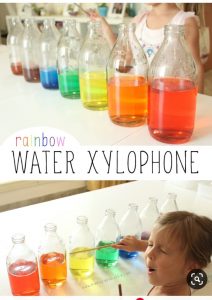
Today I would like you to make a rainbow xylophone using jam jars or bottles filled with varying amounts of coloured water. As you are filling the jars or bottles talk to your child about how much coloured water they are pouring in. Offer pencils for children to gently tap the xylophone. What can they hear? Are the sounds all the same? Or different? Can they play a tune and make up a song?


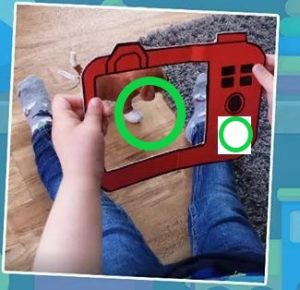
Using the camera that you made a little while ago I would like you to choose a shape; circle, square, triangle, rectangle, and draw that shape. Now can you find any items in your house or in your garden which are that shape? Use your camera to take a photograph of the items you find.


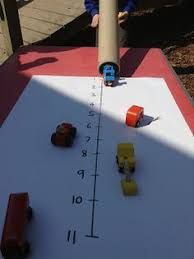
Now I would like you to find something which you can use to make a car ramp; a long cardboard tube is ideal. You need to put a large piece of paper on the ground and prop your ramp up using a box or a chair with one end of the tube on the paper. Now you need to find some cars, trains or lorries which will fit down the tube. Put one of the cars into the top of the tube and release it, how far did it go? Put a mark on the paper to show where it stopped. Do this with as many cars as you wish. Which car travelled the furthest? What happens if you prop up the ramp higher? Or lower? You can draw a number line to measure which number the car stops on.