Maths Home Learning 9th June

Good morning!

Practise the days of the week by joining in with the ‘Days of the week’ rap!

Today we will focus on measuring mass in grams (g).

The teddy weighs 20g. The weights are 5g each ( 5 + 5 + 5 + 5 =20g) and the scales are balanced.
Can you say how many grams these objects weigh?
You may have seen scales like this in your kitchen at home or in the cookery room at school. You need to read the scale. Can you see the mass of the cookie in grams is 20g. What is the mass of the toy in grams?
The scales are marked in intervals of 10.

Reasoning Cheeky Challenge:

Use the stem sentence: The……bean bag is heavier. I know this because………

Now for the fun bit! If you are able to, practise using scales to measure grams and make some delicious biscuits!

Here is the recipe:

Ingredients

  • 250g butter softened
  • 140g caster sugar
  • 1 egg yolk
  • 2 tsp vanilla extract
  • 300g plain flour

Method:

  1. Mix 250g softened butter and 140g caster sugar in a large bowl with a wooden spoon, then add 1 egg yolk and 2 tsp vanilla extract and briefly beat to combine.
  2. Sift over 300g plain flour and stir until the mixture is well combined – you might need to get your hands in at the end to give everything a really good mix and press the dough together.
  3. Roll out the dough and cut using a cookie cutter.

4.Bake for 15 minutes at 180 degrees.

I would love to see some photographs!

English Home Learning 4th June 2020

Revising apostrophes for possession

You have learnt about using possessive apostrophes in a previous lesson. Today, you’re going to revisit this important skill.

If you missed the previous lesson, you can take a look at it here.

Remember: A possessive apostrophe shows that something belongs to or is connected to something else.

John‘s football was on the roof.

The ball is owned by john and so when talking about it in the same sentence as John we use his name and a possessive apostrophe (‘s).

Visit the BBC Bitesize Website to see the videos and activities.

Home Learning – Thursday 4th June

Good morning everyone!

I hope everyone is doing well! I can see most of us are getting back into the swing of home learning again which is fantastic to see. There is some brilliant work coming in!

English

Today we begin our recounts! Your story boards were fantastic! Now what you need to do is write a sentence for each box. Use your pictures and your photos to help you. Make sure you use your neatest handwriting, finger spaces and full stops.

Year 1:  This is a recount so you need to use time words to show the chronological order. First, next, then, after that, later, finally, lastly. You don’t have to use all of them but make sure your sentence starts with one that makes sense and is in the right order.

You can use the same layout as your storyboard or you can just write down the page like normal. It’s completely up to you!

Maths:

Year 1: Bitesize

Reception:

Today is going to be a tricky Maths activity! I hope you’re up for a challenge!

Sometimes our patterns come in different sizes and they get repeated. I need you to complete these patterns for me. Level 3 might have some problems. If it has a problem, write what the problem is underneath.

There are three levels: Levels 1 and 2 are much simpler. Level 3 is harder. Chose either 1 or 2 and then have a go at 3.

Complete the patterns 1

Complete the patterns 2

Complete the patterns 3

Extra activity

Did you know you can tell how old a try is? Every year, a tree grows wider. If you cut a tree in half, you can count the rings inside to see how old it is! Obviously we can’t do that! So I would like you to find a tree and measure it. You can use anything to measure it (but a tape measure would be best!). On average, a tree grows 2 and a half centimetres every year. Adults, can you help the children work out how old a tree is?

When you’ve found out how old one tree is (it can be a really thin one to make it easier) you can guess whether the trees are really old or really young! Have a look at these trees. Can you guess how old they are?


If it starts to rain like it did yesterday, here are some more fun activities to be done inside:

Thursday’s Home Learning


Hello Nursery children and families,


Yesterday I was in school and learned a new dance with the children in Earls Hill Class. It’s called ‘The Penguin Dance’; I hope you enjoy it as much as I did:


Here is a different days of the week song. Some of you will remember singing it in Nursery:


Today I would like you to go on an ‘Alphabet Walk’. The ‘Alphabet Walk’ can be played two ways.
1. Pick a letter of the alphabet and try to find as many things on your walk that begin
with that letter (car, cat, caravan etc.).
2. Use the entire alphabet and try to find something during your walk that begins with every letter (apple, boy, car, dog, etc.).

If you use the second way it’s a good idea to write the letters of the alphabet around the edge of a paper plate and then carefully snip between each letter. When you find something that begins with a letter you can fold it in and then you know which letters you are left with.


I would like you to do some counting today. You could do this by having two containers and counting items as you move them from one container to another. You could use baskets, tubs, boxes, toy cars, blocks, whatever you have at home. Adults…..as you count, pause and see if your child can say the next number. When you are modelling counting remember to say the number as you move the item so that your child can see a clear representation of quantity. To extend the game you could use a timer to see how many items they can move and count in a given time. Take turns; who can move and count the most items?


Here are 100 ideas for things you can do at home:

Have a lovely day everyone!

Thursday 4th June Home Learning

Good morning Haughmond,

Here is a timetable for today’s home learning activities.

Why not start the day with a dance lesson from Oti Mabuse, from Strictly Come Dancing.

https://classroomsecrets.co.uk/percentage-of-an-amount-1-homework-extension-year-6-percentages/

https://classroomsecrets.co.uk/percentage-of-an-amount-2-homework-extension-year-6-percentages/

https://classroomsecrets.co.uk/year-6-parenthesis-homework-extension-ready-to-write/

Bubble Art 


Wednesday’s Home Learning


Hello Nursery children and families,


Today we are going to start the day by joining in with some zumba:


And now a song where you have to listen and follow the instructions


Here’s a fun alphabet game for you to play

You will need:

  • Paper plates or circles of card or paper
  • Pens or pencils

Write one letter of the alphabet on each paper plate. Start with matching lowercase letters. Following this you can match capitals to lowercase.

Then lay them out on the floor and play the game!  Here are the rules in case you’re not familiar with the memory game. Each player turns over two cards (plates) at a time.  If they match, the player keeps them.  If not, they turn them back over and the next player takes a turn turning over two cards.

When all the paper plates have been matched, count them and the winner is the person with the most plates.


For the next activity you will need:
  • A dice
  • Building blocks, coins, boxes etc

First you need to roll the dice. Now count the spots; how many are there? Pick up that number of building blocks and build a tower with them. Take turns doing this until there are no more blocks or you want to finish the game. How many blocks are in your tower? The winner is the person with the tower with the most blocks


It’s going to be a rainy day today. Play a game called Raindrop Races. Follow a raindrop down a window. What happens to it? Have a raindrop race with a friend. Pick a raindrop at the top of the window and see which one makes it to the bottom first.  How many raindrops can you catch on your tongue? How many can we catch all together and how can we find this out? Pretend cry, look at the raindrops trickling down your cheek and make a sad face.


Have a good day everyone!


Stiperstones Home Learning – Tuesday 2nd June

Hi Stiperstones

Hope you are all OK?

Well done for some brilliant Science yesterday.

Today we are going to continue with Maths from yesterday. Some of you found this a bit tricky so I’ve tried to attach a video today.

Home Learning – Year 5 _ White Rose Maths _ Maths Lessons Online

Y5-Lesson-2-Multiply-4-digits-by-2-digits-2019

Spelling – we are now on week 6 – Don’t forget to do your test and send me your results!

Week 6 Cursive Handwriting Practice Sheet

Week 6 Word Search

History    Complete the Family tree on Tudor History – Some of you have this in your pack. How much can you do without looking at the answers?        Family trees

You could also look at this timeline and try and arrange into chronological order if you haven’t already done it.  This is also in the pack.

time line cards

Have a great day everyone!

Year 5 Maths ans English

Maths Learn how to use your knowledge of fractions to multiply mixed numbers by integers.

https://www.bbc.co.uk/bitesize/articles/z76j2sg

Fractions reminder

English – Learn how to create characters and use semicolons.

https://www.bbc.co.uk/bitesize/articles/zkdr92p

A semicolon can be used instead of a full stop between two related sentences or independent clauses. This links them together in a way a full stop doesn’t.

Semicolons in sentences

A semicolon can replace a coordinating conjunction that links two independent clauses together. For example:

  • Her cape is yellow and his cape is green.

Becomes:

  • Her cape is yellow; his cape is green.

You don’t use a capital letter after a semicolon as it isn’t a new sentence.

The only time you would use a capital letter after a semicolon is when the word is a proper noun eg Sophia.

Why spend time creating a character?

Every good story needs strong characters. There are six categories to think about when designing a character:

  • Physical Appearance:

What do they look like? Are they male or female? Do they have any special features like a scar?

Use lots of descriptive language (eg adjectives and similes) to help build an image of your character in the reader’s mind.

For example, the simile he had muscles like concrete blocks tells the reader that the character has huge muscles!

  • Job and skills:

Does your character’s job suit their appearance? Do they have skills that are important for your story like x-ray vision?

  • Clothing:

What a character wears can reflect their personality and what they get up to in your story.

She is dressed head to toe in stretchy black material that clings to her menacing muscles. This shows that the character is dangerous!

  • Name:

A simple name (eg Mrs Wilson) might mean your character’s special features are a surprise. A complex name (eg Helga Van-Schwarzenbrow) tells the reader more about the character!

  • Setting:

Does your character’s home or base reflect their personality and appearance?

  • Likes and dislikes:

What does your character like or enjoy? On the other hand, what are their weaknesses?


Year 4 Maths an English

Maths –  Subtract fractions from whole numbers and from mixed numbers

https://www.bbc.co.uk/bitesize/articles/zdx3rj6

Fractions reminder to help visualise .


English –  To understand how to use brackets to add extra information to your writing.

https://www.bbc.co.uk/bitesize/articles/zkfvgwx

Brackets can be used to add additional information to a sentence.


Extra detail can be added to a sentence using brackets. The extra detail should not change the meaning of the sentence – it should just make the sentence more interesting or informative.

For example:

Albert the alien was in charge of the wrecking ball.

Albert the alien (who had no training) was in charge of the wrecking ball.

If we took away the words in brackets the sentence would still make sense, but it’s more interesting with the added detail.

A happy red alien

The added detail in the brackets should go straight after whatever it is adding information about.

For example:

The footballer (who looked rather tired) shot the ball at the massive net.

  • The extra information is about the footballer.

The footballer shot the ball (which was covered in mud) at the massive net.

  • The extra information is about the ball.
Image of a football

Tuesday’s Home Learning


Hello Nursery children and families,


I hope you all had a lovely day in the sunshine yesterday. Did you make sandwiches to eat on a picnic?


Today we are going to start by joining in counting to 20:


Do you know what day it is today? What day is it tomorrow? Let’s learn the days of the week by joining in the song:


Now I would like you to watch and join in with the shapes song. Which shapes can you recognise and name?


To practise recognising and naming 2D shapes I would like you to make this funny feed the hungry shape monsters sorting game using pieces of old cardboard, some paint and googly eyes!  Don’t worry if you don’t have paint you can just use card or boxes and draw googly eyes on them. .

 To make this recycled game you need:
  • pieces of cardboard
  • ready-mix paints
  • googly eyes
  • glue
  • scissors

Feed the shape monsters shape sorting game for kids!

All you need to do is  paint the cardboard in as many colours as you like, using one per 2D shape that you wish to create. You could also make them all one colour, or black and white even, for an extra challenge!

Cut each piece of cardboard into  a 2D shape; circle, square, rectangle and triangle. Then cut the corresponding shaped hole to represent a mouth. Add or draw some googly eyes to turn them into hungry shape monsters, ready to gobble up their favourite shapes!

Now cut out lots of smaller shapes and put them in a little tray, then set out the hungry shape monsters ready to sort through and feed them all!

Encourage your child to name the 2D shapes modelling the vocabulary such as ‘corners’ and ‘sides’ while describing them.

For an extra challenge and the next step on you could add in more unusual shapes such as hexagon, heptagon, octagon and even more!  Alternatively, ask your child to sort them by the number of sides or corners that they have or even create some 3D and others 2D to mix it up

Here is a link to an online shape monsters game which the children have played in Nursery:

https://www.topmarks.co.uk/early-years/shape-monsters


If You’re Happy and You Know It

Have fun singing this song together:

If you’re happy and you know it clap your hands

If you’re happy and you know it clap your hands

If you’re happy and you know it,

And you really want to show it,

If you’re happy and you know it clap your hands.

Ask your child how they are feeling and become songwriters by adding new verses about different feelings.

e.g. If you’re cross and you know it stamp your foot or If you’re excited and you know it jump around or If you’re hungry and you know it rub your tummy

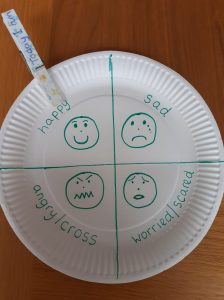
Use the emotions wheel you made a while ago as a visual clue for them to express their feelings if it helps.


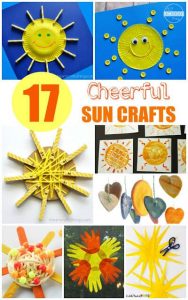
As it is going to be a sunny day again today you could create a sunshine. There are some ideas below to get you started
 

Have a lovely day in the sunshine everyone!



CEOP
Parent View - Give Ofsted your view on your child's school
© Holy Trinity CE Primary Academy and Nursery 2026
Shropshire web design by kiskadoo