RAF Cosford half term competition

COMPETITION TIME!

RAF Cosford Museum are running a poster competition over the half term. They need help, creating an attractive poster to help reopen their museum (when it is safe to do so).

Here is a link for a ‘poster pack’ which you can use to help you create your poster.

https://www.rafmuseum.org.uk/documents/Cosford/Educational-Visits/Online_Resources/FamilyResources/RAFM_Poster_Activity.pdf  

Below I have included some videos to help you with the creation of your poster.

The first video is a tour of Cosford RAF Museum, and the second is an introduction to 100 years of flight.

I have also attached a link for you to visit the museum website to help further with the creation of the poster.

https://www.rafmuseum.org.uk/cosford/schools-and-colleges/family-worksheets.aspx

The link also has a wide range of fun activities for you to participate in.

There are some good prizes up for grabs! If you create a poster, send a picture of it to you class email address or Dojo page, so your teacher can submit your entries for you.

Good luck and have fun!

Long Mynd Celebration Post 21st May 2020

Hello everyone! Another week to celebrate the incredible efforts you are all making at home!

I’d like to start with our Matheltics Champions!

This week we have 4!

Georgina, Alicja, Zorni and Owen! 

A massive well done to all of you! Keep up the brilliant effort! Your certificates are below.

LONGMYND_from_18-05-2020_to_24-05-2020

I’ve seen some exceptional work coming from home this week, if you see a piece of your work you should be very proud!

Thank you to everyone who sends me pictures of the work you are doing at home, it means I can help where needed and celebrate when I get the chance!

Next week is half-term so I won’t be posting activities every day for you, but please look back and see if there are any that have already been set that you haven’t completed yet.

Keep sending me your brilliant work and pictures!

Mr Hughes

Home Learning 21st May 2020

End of Year Questionnaire

Hello! Although we have had to cut this year short due to the current situation, there is still so much learning and so many experiences we can celebrate!

From September we have had 3 different topics that we have used to help us with our learning, starting with:

Dangerous Dragons

Dragon types (for riegn of fire rp) | Anime Amino

Where we described and wrote stories about dragons, instructions on how to catch them and even made our own clay dragon eyes!

Rocks, Relics and Rumbles

Volcano super eruption: It is coming 'sooner or later' - shock ...

Where we learnt about incredible volcanoes, the earth beneath our feet and what is at the center of our planet.

Gods and Mortals

This modern painting shows the battle between Hercules and the ...

Finally, we learnt about the Ancient Greeks, their gods and mythologies! We had a museum visitor who brought lots of interesting and ancient artifacts for us to look at and wrote our own myths.

I’d like you to think about all of this and fill in a questionnaire about what your favourite parts of this year were and what you think you’ve become better at and what you think you’d like to be better at.

Please work through this together and write down your answers:

Long Mynd Questionnaire word

Can you please send your finished questionnaires to longmynd@holytrinitycepa.co.uk
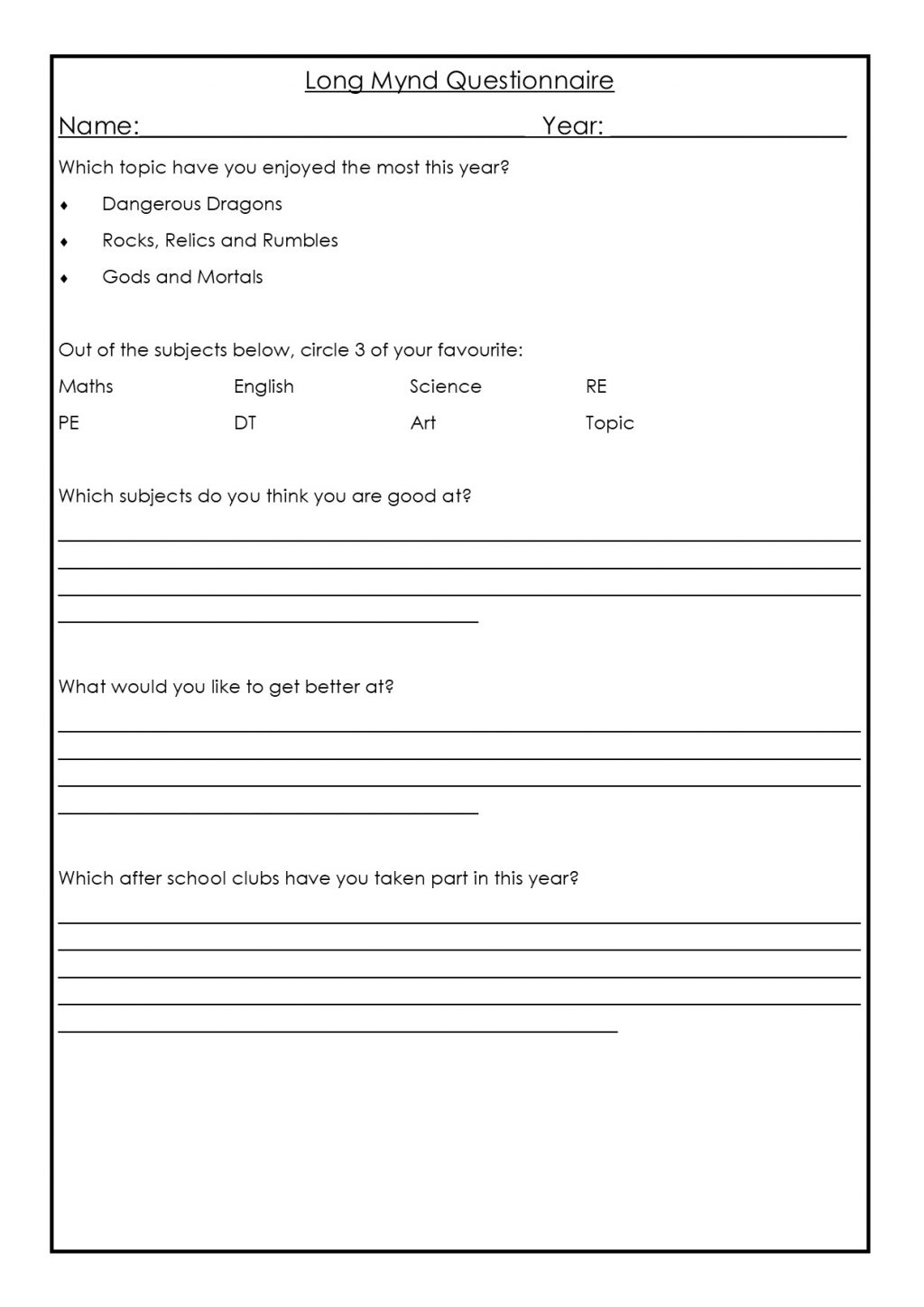

English Home Learning 21st May 2020

Creating a formal report

Reports are informative pieces of writing that give information to the reader about a certain topic. For example: space, the bald eagle, Scotland, flags of the world or anything else you’re interested in.

Report rules

  • All the information must be about the same topic.

  • You should provide the audience with lots of facts and evidence rather than personal opinions.

  • Reports must be set out clearly with a title, introduction, paragraphs, subheadings and images. (Subheadings are little titles for each paragraph, or group of paragraphs, to explain what they are about.)

  • They should be written in a formal tone (like how you would speak to your head teacher).

  • They should be written in the present tense (as if the actions are happening now).

    Follow the BBC Bitesize link to see the videos and activities where you can learn how write your own report. I would love to read a report you’ve written about something you’re interested in! 

Cloud Spotting!

With the weather outside I thought this would be a great opportunity to spend some time looking up at the clouds above us!

What You’ll Need: 
  • A blue sky with clouds.
  • An open, comfortable space to lie.
  • A rug or equivalent to lie on if the ground is damp.
  • Alternatively a seat by a window, where you can comfortably relax.
Instructions 
  1. Choose a day when you will be relaxed lying on the ground looking up at the sky.
  2. Find a comfortable spot. In the garden or by a window.
  3. Look at the clouds in the sky.

Task 1: Verbal Literacy: Describe what you can you see? Can you see a unicorn? Can you see a fairy-tale castle? Can you see a whale or a dolphin? What do the clouds make you think of? Are there any patterns or shapes you can see? Use your imagination. You could also take a picture of what you see.
Looking up will never be the same again: Cloudspotting for ...
Task 2: Write a short story about the different things you can see amongst the clouds? Observe the clouds for a while and start to think about what adjectives best describe the clouds. What creative story could you write about to explain what is happening up there in the sky? I have attached an information e-book to help you learn about types of clouds. You could add some of these facts to your story and descriptions to show your new understanding of clouds.

Read about the different clouds in the cloud spotting guide here. Or here t2-g-2567180-clouds-ebook-english_ver_2

You can even get a bit crafty! Look at the picture below for some inspiration!


Maths Home Learning 21st May 2020

Tenths

Carrying on with fractions we’re now looking at tenths (1/10)!

One Tenth As A Decimal | Tenth Fractions | DK Find Out

As you can see in the picture, each shape has 10 equal pieces and 1 piece is coloured in. So 1/10 is coloured. This is known as a tenth.

Can you work out what the fraction for this shape would be?

Tenths Fraction Chart: Words and Numbers

Follow the link to the BBC Bitesize page to see the video and activities to practise tenths.

Challenge

Home Learning – Art Lesson Desert Doodles

In today’s lesson we are inspired by an artist who loves to doodle on everything, Sam Cox.

Cass Art Interview | Sam Cox (The Doodle Man) - Pick up a pen and ...

You don’t have to copy the drawings exactly, for this lesson if you want to change the desert images or the colours that’s fine, it is your art!

The Kooky Drawings of Sam Cox | Scene360

If you don’t have the same resources as the artist at home don’t worry, just use what you have. You could even try and make your own for this lesson.

The Doodle Man: Artist interview with Sam Cox | Cass Art

I hope you have fun drawing or painting along.

Maths Home Learning 20th May 2020

Unit and non-unit fractions

Did you know that there are different types of fractions?

The two types that we are looking at are called unit fractions and non-unit fractions. Both unit and non-unit fractions show us how much of the whole we are talking about.

Teacher fractions

A unit fraction is a fraction where the numerator (the number on the top of the fraction) is 1. The denominator (on the bottom) can be any other whole number. A good way to remember it is by remembering that unit means 1!

Here are some examples of unit fractions: ½, ¼ and ¹⁄₁₀

Can you think of any other unit fractions?

A non-unit fraction is a fraction where the numerator is greater than 1. The denominator can be any whole number.

Here are some examples of non-unit fractions: ⅖, ⁷⁄₁₂ and ¾

Can you think of any other non-unit fractions?

Example 1

Emma and Sophie shared a pizza that was cut into 6 pieces. Sophie ate ⅙ of the pizza and Emma ate ⅚ of the pizza.

Which of these two fractions is the non-unit fraction?

Look carefully at the numerators. If it’s a non-unit fraction, we’re looking for a number that isn’t 1, so ⅚ is the non-unit fraction. That means ⅙ is a unit fraction.

Pizza cut into sixths

Example 2

Take a look at this rectangle that has been split into 10. Some of the squares are different colours.

  • ¹⁄₁₀ squares is yellow.
  • ⁴⁄₁₀ squares are blue.
  • ⁵⁄₁₀ squares are red.

Which colour represents a unit fraction?

Let’s look at the numerators. Remember, unit means 1 so look for the fraction that has 1 as the numerator.

Yellow represents the unit fraction since it is ¹⁄₁₀ of the rectangle.

Visit the BBC Bitesize website to see the activities.

Challenge

English Home Learning 19th May 2020

Using Formal and Informal Language

Formal language is used when we are communicating with people we don’t know very well and want to impress or show respect to. For example, police officers or head teachers.

Informal language is used when we are more relaxed and with people we know well.

For example:

  • Think about how you would answer your best friend if they asked you what you did at the weekend.
  • Now think about how you would answer the same question if your head teacher asked you instead.
  • How would each answer be different?
 We often use formal language when we write. However, there are times where writing can be informal, like when we’re writing texts messages, emails, postcards or letters to friends.

We use informal language more when we speak, but there are also times where it is expected that we speak formally. For example, in a classroom presentation or when meeting someone new.

Visit the BBC Bitesize page to see the video and activities where you can practise using formal and informal language.