Maths Home Learning 10th June

Good morning!

Practise the months of the year by joining in with this catchy song.

Today we are going to focus on finding the mass of different objects in kilograms (kg)

There are 1000g in 1 kg!

Look carefully at the scales, the kilograms are marked in red.
If two cans of beans weighs 4kg (2kg + 2 kg) then one can must weigh…

Have you seen scales like this at home? These are used to find out how much a person weighs.

Reasoning Cheeky Challenge:

Clue: Barrel A must weigh 6kg ( 4kg + 1kg + 1 kg)


English Home Learning 10th June

Good morning!

I hope that you have been practising your spelling words this week. Don’t forget to keep practising the Year 2 common exception words aswell!

T-L-5157-Year-2-Common-Exception-Words

To get you in the mood for poetry writing, try some thought bubble mindfulness:


Make sure you have the notes you made about bubbles infront of you.

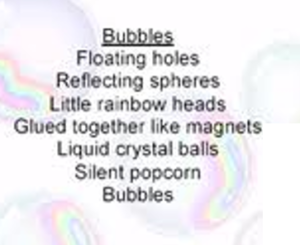
Add your notes to this sheet so that you are ready to start writing your own poem.Write your bubble poem out in your workbook first.

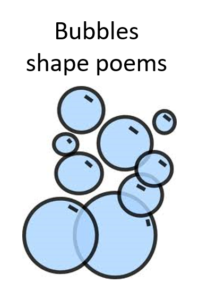
Now think about the bubble shapes you could use to write your poem inside. Here are some ideas:


Now draw a bubble shape and carefully write your poem inside. Don’t forget to send photographs!

English home learning 9th June

Good morning!

I hope that you enjoyed reading the bubble poems yesterday. Here is a ‘Bubble’ poem for you to listen to!

Look at these images of bubbles, collect as many adjectives (describing words) as you can!

If you have a tube of bubbles at home…have some fun! Blow the bubbles and watch how they move. Can you think of words to describe how the bubbles move?

If you don’t have any bubbles you could watch this animation:


Finally, could you add andadverb ( often ending in ‘ly’).

For example:

The soft, transparent bubbles bobbed about slowly.

Record you ideas on a large sheet of paper or in your workbook ready to help you to plan your own shape bubble poem.

Maths Home Learning 8th June

Good morning!

Practise counting in 10s by joining in with this song:

Quick question: What are these used for?

They are called balance scales and are used to measure the mass of an object.

What is mass?

Mass refers to the weight of an object. It is measured in grams (g) and kilograms (kg).

Key ‘Mass’ vocabulary.
Look at the scales. The side with the green apple is lower, this means that the green apple weighs more than the red apple.
The egg is lighter than the cake and the cake is heavier than the egg.
The scales are balanced. This means that the apple and the pen weigh the same or equal.
Use the more than, less than and equals symbol to describe these scales. If you can’t print you could draw the scale and write the sentence underneath.
Complete these sentences using the correct language (words).

Reasoning Cheeky Challenge:

Use the stem sentence: I know that……….I know this because…….

English home learning 8th June

Good morning!

I hope that you all enjoyed the weekend. There are new spellings and dictated sentences under the spelling tab along with a quiz on Purple Mash.

Here is a short video to help with your spellings this week:


This week we are going to focus on poetry based on our Bubble theme


I have set a ‘2do’ on Purple Mash called ‘Light Words’. you have to think of as many alternative words (synonyms) as you can.
This week we’re going to look at special sorts of poems, called ‘Shape poems’.

Can you guess why they might be called Shape poems?

By the end of this work you will be able to

  • use exciting, describing words (adjectives, verbs and adverbs)

  • to write your very own poem.

Today I would like you to read and think about a range of different ‘Bubble’ poems:

This poem is called Bubbles by Cathy Cronin, Art by Robin Boyer
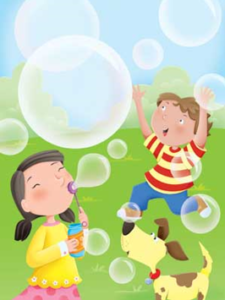
A magic wand and secret potion … Dip it gently in slow motion … Take a breath and softly blow; Chase the bubbles high and low!


Bubble

Here’s a bubble. There’s a bubble.

Tiny or huge, round, transparent spheres,

Watch them flying high, gathering speed on the wind.

See them floating gently, drifting silently down,

down to the ground  and P O P !
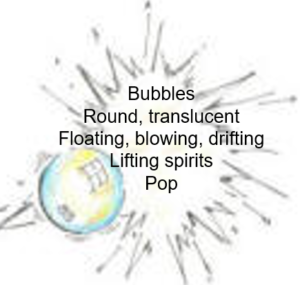
Choose one of these poems to write a poetry review, you could use this template or write your review straight into your work book.

T-L-6097-Poem-Review-Writing-Frames-


Topic Home Learning week beginning 8th June

In this video Barnaby Bear visits the seaside. Have you ever been to the seaside? What did you do there?


I would like you to think about the features of a coastline which are natural and man made. Here is the key vocabulary you will need:

Now look at these images of a seaside. Which parts are natural and which are man-made?

Using the word bank, can you label the seaside are?

You could print these sheets or create your own labelled drawing.

Differentiated Features of the Seaside Activity Sheet

Spellings 5th June

I hope that you have been practising your spellings, did you ask someone to read the dictated sentences to you so that you could practise your spellings and handwriting?

Your new spelling focus is words ending in -il

Here is your Look -See- Cover – Write -Check sheet and dictated sentences for you to use to check the spellings.

Year2Summer2Week2LSCWC

Year 2 Summer 2 Week 2 Dictations

Try to make spelling practise a bit more interesting:

Spellings 5th June

Your spelling focus for the next week is ‘ge, dge and g letters used for same sound’.

Here is your Look – Say – Cover – Write – Check sheet:

Year2Summer2Week3LSCWC

Here are the dictated sentences:

Year 2 Summer 2 Week 3 Dictations

A quiz has been set as a ‘2do’ on Purple Mash to help you to practise your spellings this week.

Good luck!

English Home Learning

Good morning!

A quick reminder that you have lots of books and reading activities you can access on Bug Club.

The link is below:

http://www.activelearnprimary.co.uk/

Our school code is wcpy. If anyone is struggling to log in please email: caradoc@holytrinitycepa.co.uk

New spellings will be set under the spelling tab today.

Today our English work will be a reading comprehension. It is a non-fiction text called ‘All about Beaches’ and links to our new topic ‘Coastlines’.

t-t-29154-ks1-all-about-beaches-differentiated-reading-comprehension-activity_ver_4

Don’t worry if you can’t print this text, you could open it and read it on the screen and write the answers in full sentences in your workbook.

For those of you who have finished your Bubbles story, you could go back and try to make it even better!

Check the spellings carefully using your Common exception word list.

Check your punctuation. Does every sentence begin with a capital letter and end with either a full stop, question mark or explanation mark?

Are your descriptions interesting? Could you use ‘expanded noun phrases’ using two adjectives separated by a comma before the noun e.g.

The tiny, yellow shells glistened on the sand.

CEOP
Parent View - Give Ofsted your view on your child's school
© Holy Trinity CE Primary Academy and Nursery 2026
Shropshire web design by kiskadoo