Maths Home Learning 26 June 2020

Challenges for Year 3

Challenge 1

Here is a toy car and bus.

The toy car and bus are lined up against a 15cm ruler; the car lines up from 0 to 6cm and the bus lines up from 7 to 15cm.

By how many cm is the bus longer than the car?

Grey line

Challenge 2

Here are 3 beanbags.

Beanbag A, beanbag B and beanbag C.

They are placed on a seesaw.

The first seesaw shows that beanbag B weighs more than beanbag C and the second seesaw shows beanbag C to weigh more than beanbag A.

Which beanbag is the heaviest?

Grey line

Challenge 3

Amir is dividing a 2-digit number by 3.

His answer is a whole number.

The first card displays the number 2, the second card is blank. A divide symbol sits before the third card, which displays the number 3.

What could the missing digit be?

Grey line

Challenge 4

Lewis makes a repeating pattern with some shapes.

A triangle, circle, pentagon, triangle circle, pentagon.

Lewis repeats the pattern.

What is the shape in the 50ᵗʰ position?

Visit the BBC Bitesize page and scroll to the bottom for the answers.

English Home Learning 26 June 2020

A Midsummer Night’s Dream Retold by Marcia Williams

Using Marcia Williams’ retelling of A Midsummer Night’s Dream you will learn how to summarise information and use your prediction skills.

Kevin Clifton to leave Strictly Come Dancing - BBC News

Visit the BBC Bitesize page to watch Strictly Come Dancing‘s Kevin Clifton reading extracts from the book and the activities.

Home Learning – Friday 26th June

Good Morning! 

It was incredibly hot yesterday! I don’t know about you but I’m quite happy to see the rain today! 

Remember that today is celebration day! It’s your last chance to get those Dojo points! I will be uploading the video at 3.30 today! Stay tuned to see who’s won!

English 

Today we are finishing off our stories. So the final part of your story is the quest itself. What happens on your quest? Do you have to go somewhere spooky? Or defeat a monster? Or climb a huge obstacle? When you’ve been on your quest, finish your story by returning to the character and giving them the object. How are they? Are they happy? I cannot wait to hear your stories! 

If you have not written a story yet and would like to, you can complete a story board instead: Story Board

Draw a picture in each box and write a caption below it. 

Maths: 

Reception and Year 1: I would like you all to have a go at this game: https://www.topmarks.co.uk/maths-games/hit-the-button

This game reinforces the key maths that the children should be beginning to learn in Reception and should begin to build upon in Year 1. 

Today Reception should just focus on Doubles up to 10.

Year 1 can have a go at Halves, Doubles and Number Facts. 

Extra Activity

I would like you to think up a title for your story and create a front cover please! Make it bright and eye catching!


Friday’s Home learning for Stiperstones and Hawkstone

Hi Everyone,

We are at the end of our roller-coaster week. Hope you have had more ups than downs.

English – Write a Magazine Review on your Theme Park. Here is a WAGOLL

Zero Gravity Review

Here is template for your review.Mega Drop Magazine Review Template

Maths – Work out the profit you have made after a year of running your park.

Theme Park Presentation Lesson 6 

Lesson 6 Annual Profits Activity Sheet

This afternoon you can perhaps add some other models to your park or make a lego model of your park. If you don’t want to do this perhaps you can do a picture similar to the ones below.


https://education.byu.edu/arts/lessons/screamin’-roller-coasters

Have a great day and a lovely weekend!

Friday Maths

Today I’d like your child to work on the concepts of one more and one less. You will need your number cards to 10 or 20. If possible draw an ice cream sundae for your child and cut out a number of red circles to represent cherries (up to 10 or 20 depending on the confidence of your child)

If you are not able to draw a sundae or provide cherry circles, you could complete the activity using up to 10 or 20 building blocks or Lego bricks. Or you could use small toys, animals, coins or counters. The important thing is that your child is working on the concept of one more and one less, not the equipment they are using to doing it.

Ask your child to choose a number card. Ask them to put that many cherries on the sundae (or build a tower of that many cubes/bricks or put that many toys/counters in a row). Either ask them to add one more and say how many they have now or ask them to take one away and tell you the amount that is one less. This example shows a number 8 card. The instruction is to add 1 more and so there are 9 cherries on the sundae.


Repeat this a number of times so your child is confident with both concepts. Remind them that if it is more the number gets bigger and if it is less the number gets smaller.

Play number ping pong with your child. Pick a concept (either one more or one less) and stick with it. Explain to your child you will say a number, and they have to tell you which is one more or one less (depending on the concept you have chosen). Begin by pointing to yourself and say any number (up to 10 or 20) then point to your child and they say their number. Point back at yourself and say another number and then again point to your child so they say their number. Repeat this until your child is quick and confident. Don’t pick the numbers in any particular order, keep them on their toes! You could now try the game using the other concept.

Friday Literacy

Today I’d like your child to play a ‘yes/no’ game. Ask your child to read the following questions and then decide on the answer.


Now please read a few of the questions for your child. Read them one sentence at a time and ask your child to try and write them independently. Remind your child to use their phonics, finger spaces and punctuation (question mark).

Back to School!

We have had an exciting phased return to school. We have had a small group of children in our Clee bubble. Each week we have had a different theme, led by the children’s interests and we have taken part in some exciting activities. Here is a snap shot…

Week 1 – Bubbles
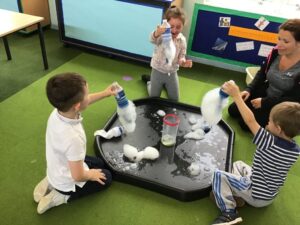
We made bubble snakes using socks, bottles and bubble mix!
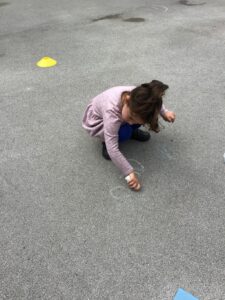
We listened to a number and chalked that many bubbles onto the ground.  
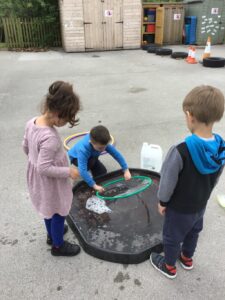
We made giant bubbles using a tough spot and plastic hoops.
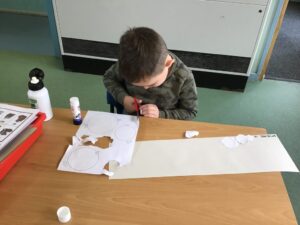
 

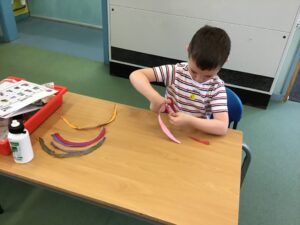
We practised our cutting skills and ordered paper bubbles according to size.
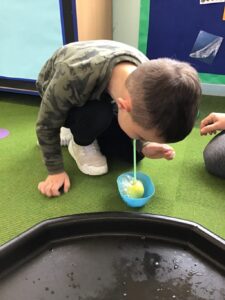
          

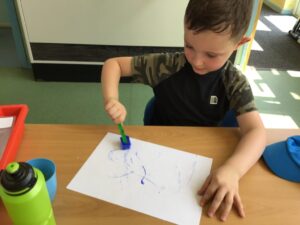
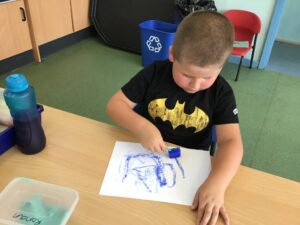
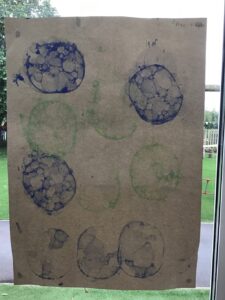
We explored bubble apples and made bubble print pictures.
Week 2 – Rainbows

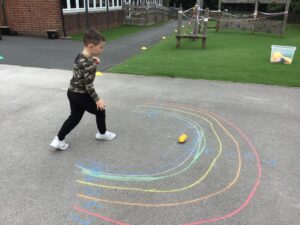
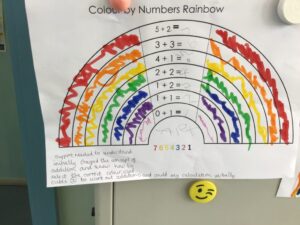
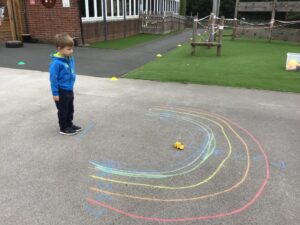
We took part in rainbow maths. We threw the beanbag onto a numbered rainbow and said the number that was one more and one less. We also added the rainbow numbers and doubled them.
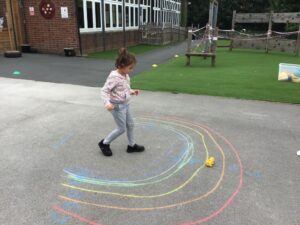
 

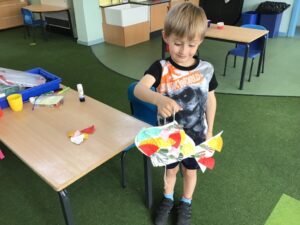
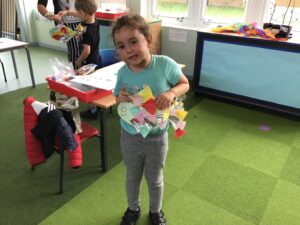
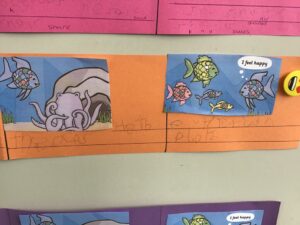
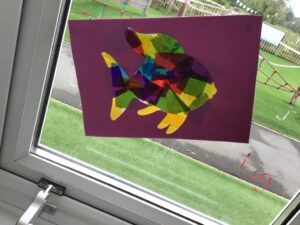
We heard the ‘Rainbow Fish’ story and sequenced the pictures. We made rainbow fish stained glass windows, and cupcake case fish.
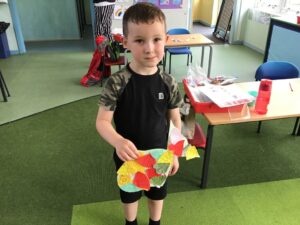
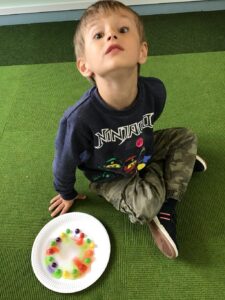
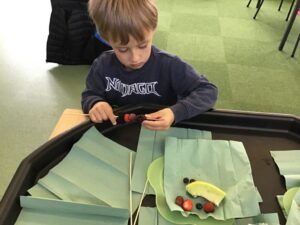
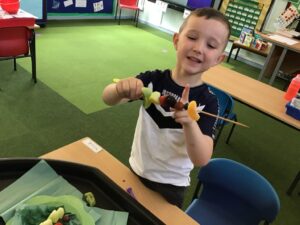
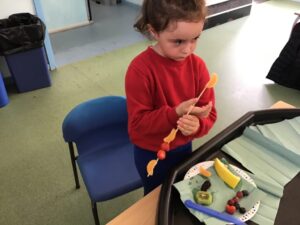
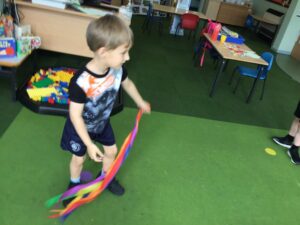
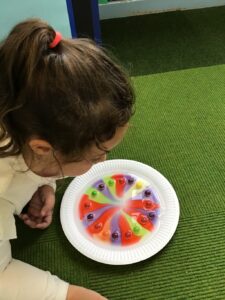
We made rainbow fruit kebabs, used our maths to create a colour by numbers rainbow, danced with rainbow ribbons, and took participated in a skittles rainbow experiment.
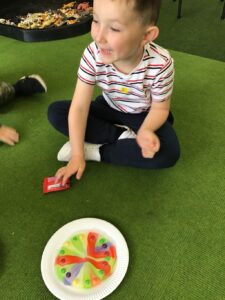
 

Week 3 – The Arctic

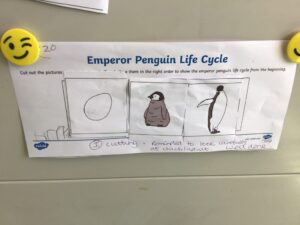
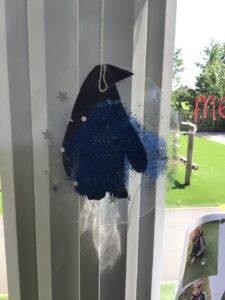
We have heard the stories ‘Cuddly Dudley’ and ‘The Emperor’s Egg’. We made penguin window art, labelled penguins and sequenced the penguin life cycle.
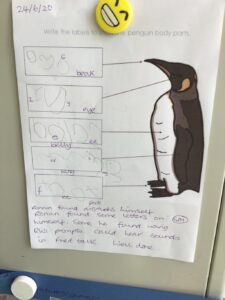
We tried coloured ice writing.
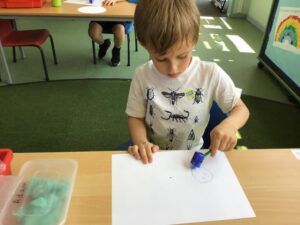
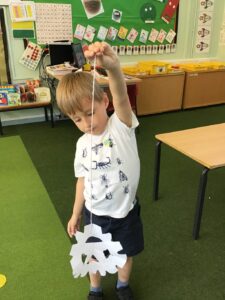
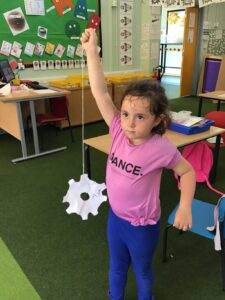
And used our cutting skills to create beautiful snowflakes.
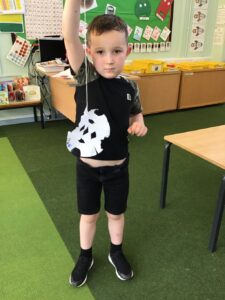
 

Our return to school has been an adventure we have all really enjoyed!


English Home Learning 25 June 2020

Creating Characters

We’ve done lots of character creation this year, from dragons to Greeks heroes and monsters!

The myth of Theseus and the Minotaur | Knossos Guides

This is another chance to practise those skills you have learnt and learn more about how authors create their characters.

When authors create a new character they have to know everything about them. This means answering a lot questions about what that character is like.

Heromachine: Golden Age DC Heroes by irishfist123 on DeviantArt

Authors need to know everything about their characters so they know how they will act throughout the story.

They ask themselves questions like:

  • What’s the character’s name?
  • How does the character behave?
  • What do they like to do?
  • How old are they?
  • What do they feel and what are they thinking?

Visit the BBC Bitesize Page to see the videos and activities.

Maths Home Learning 25 June 2020

Parallel and Perpendicular

We see lines everywhere around us all the time, for example on buildings, books, televisions, photo frames, roads etc.

We learnt how to identify some different types of lines in yesterday’s lesson and today we are going to look more closely at identifying parallel lines and perpendicular lines in shapes.

handprint : perspective in the worldPerpendicular line in real life – abyn | Real life, Life, WorldParallel Lines In The WorldReal World Parallel and Perpendicular Lines by Southard Sara | TpT

Parallel lines are two lines that are always the same distance apart and never meet, just like railway tracks.

To show that two lines are parallel, you draw matching arrows on each line facing the same direction.

parallel lines

Perpendicular lines are lines that meet at a right angle (90°), like a corner of a room or the edge of a book.

To show that two lines are perpendicular, you draw the right-angle sign in the corner where the two lines meet.

Perpendicular

Example 1:

Look at the trapezium below.

trapezium

The top and bottom lines are parallel because they will never meet and will stay the same distance apart, no matter how long the lines go on for!

The parallel lines have been marked with matching arrows.

The trapezium also has perpendicular lines, which have formed two right angles. They are marked with the small square symbol in the corners.

Example 2:

This parallelogram has no right angles so no perpendicular lines, but it does have two sets of parallel lines.

parallelogram

The two sets of matching arrows show you which lines are parallel.

How many parallel and perpendicular lines can you see around your house?

Visit the BBC Bitesize page to see videos and activities on recognising the different lines.

Thursday’s Home learning for Hawkstone and Stiperstones

Good morning Everyone

I am so looking forward to seeing your roller-coasters. I hope you enjoyed making them.

Theme Park Presentation Lesson 4

Lesson 4 Working out Entrance frees

This may take you the morning to sort out.

Theme Park Presentation Lesson 5

Create a great advert for your theme park and finish off your roller coaster.

Have fun xxx

CEOP
Parent View - Give Ofsted your view on your child's school
© Holy Trinity CE Primary Academy and Nursery 2026
Shropshire web design by kiskadoo