Outdoor Learning

This week we are looking at outdoor learning – taking our learning outside! We are going to be orienteering, identifying leaves and building shelters.

Below is a timetable and a leaf identification sheet

wb 6.7.20

leaf-id-sheet

English Home Learning 6 July 2020

Revising subordinating conjunctions

You have learnt about subordinating conjunctions in a previous lesson.

Today you’re going to revise what they are and use them independently in your writing.

Let’s recap

Subordinating conjunctions:

  • Are the words that link a main clause and a subordinate clause together in a sentence.
  • Help to add the extra information that tells us when, why or where something happens.
  • Are words such as ‘because’, ‘as’, ‘while’, ‘until’, ‘so’.

For example:

He was annoyed because the train had stopped.

  • ‘He was annoyed’ is the main clause. It makes sense on its own.
  • ‘Because the train had stopped’ is the subordinate clause. It adds information to the main clause and needs the main clause to make sense.
  • ‘Because’ is the subordinating conjunction. It helps to add the information to explain why he was annoyed.

Top tip!

Subordinating conjunctions can also go at the start of sentences. When this happens, the whole subordinate clause moves too and is followed by a comma.

For example:

Because the train had stopped, he was annoyed.

A robot monster holding up two subordinating conjunctions

Visit the BBC Bitesize page to see the videos and activities.

Maths Home Learning 6 June 2020

Measuring mass in g and kg

Measuring mass comes in handy all the time. Whenever you bake or cook, you have to use scales to weigh the ingredients. If you didn’t use the correct amount of flour in a cake, it would not taste nice!

When measuring mass, you use grams and kilograms.

1000 g = 1 kg

When you’re reading scales, you have to look really carefully at the intervals (divisions) between the numbers. This is so you can identify which numbers they represent.

The scales tell you whether you are reading grams or kilograms.

Did you know?

Example 1:

Take a look at the scales below.

Scales showing 750 g

When reading scales, the first thing you have to do is look at the intervals. What are the divisions going up in?

The larger intervals go up in hundreds. You can also see there is a smaller interval in between each hundred. This must be worth 50 g since it is the halfway point between hundreds.

The arrow on the dial is pointing at the smaller division between 700 g and 800 g, so the mass of the fruit must be 750 g

Example 2:

This time, the scales are in kilograms.

Scales showing 2300 g

The arrow is between 2 kg and 3 kg, but what do the intervals represent?

The kilograms are split up into 10 divisions, so each one must represent 100 g, since 10 lots of 100 g is 1 kg.

The arrow is on the third division after 2 kg, so the weight of the potatoes is 2kg 300g

What would 2 kg 300 g be in just grams?

2 kg is the same as 2000 g. So:

2000 g + 300 g = 2300 g

Example 3:

A scales with no pointer

How would you draw an arrow to represent the mass of 7 kg and 800 g?

First thing to do is work out what the smaller divisions represent in-between the whole kilograms.

The kilograms are split up into 10 divisions, so each one must represent 100g.

Now, you have to find the 8th division after 7kg and draw an arrow to represent 7kg 800g.

Like this:

Scales showing 7 kg and 800 g
Visit the BBC Bitesize page to see the videos and activities for measuring mass and wegith in kg and g.

Home Learning – Monday 6th July

Hello and welcome back to a brand new week!

I hope you are all feeling bright and beautiful!

This week we are learning all about the story “Sharing a Shell” by Julie Donaldson. Have a listen to the story here:

English

In the story, Crab is very protective of his shell. This is because he loves it dearly. Sometimes when we love something a lot, we don’t always want to share it because it’s so special! Sometimes its even better to share our something special with our friends and family and they can enjoy it too! That’s what Crab does in the story! Is there something that is very special to you? 

Mild

Can you draw a picture of your special something and even try and write it’s name? If you can’t write it’s name, maybe you can copy the word if an adult writes it for you!

Medium

Can you draw a picture of your special something and write a sentence to tell me all about it? You could write, “My special something is …” Or you could write “It is called…”

Spicy

Can you draw a picture of your special something and write all about your special something? Start with writing what it is. Then you could write why it is special and who you would like to share it with! 

Maths 

Mild

Have a go at this lovely Crab dot to dot!

Medium

Have a go at this Dot-to-Dot!

Spicy

Have a go at drawing your own Sharing a Shell picture and make it into a dot to dot by drawing dots with numbers! See how high you can go!

Extra Activities

Be Super Sea Spies and listen to the clues in here: Who am I

Then see if you can guess the animals! 


Out door home learning for Stiperstones and Hawkstone – Monday 6th July

Good morning Everyone!

I hope you have had a great Weekend.

Don’t forget Stiperstones- at 10.00 am we are having a Zoom meeting.Get your devices ready. Can’t wait to see you.

So….. this week and next week – we hope to be having fun in the outdoors.

Maths – Learning Objectives week 1  We are only doing invstigation 1 today

English – Remember when we did some riddles earlier in lockdown on Henry V111

Here is your chance to do some more, but this time on wildlife and the great Outdoors

cfe-t-2544987-what-am-i-outdoor-treasure-hunt-activity_ver_3 riddles

Try not to cheat and look at the answers. Can you now make up two of your own riddles and perhaps illustrate your answers.

It is now time to find out more about the trees in the UK and to see if you can identify any perhaps in your garden or out near the area close to where you live.Printable Nature Worksheets – Let’s Grow Wild

Look at the sheet on the leaves and try to identify any leaves that you can. It is on page 20 of this booklet.

Some of the activities in here at quite young for you – but if you would like to do any of them – then feel free and post them on Dojo.

Also try to make this leaf identification wheel. It’s a cool way of starting to identify the trees around us.leaf-idial-sheet and leaf-id-sheet

Have fun outside today.


Celebrating fantastic home learning from Stiperstones

Well done to all of you children that have been taking part in all of our home learning tasks. We know it is not easy from home,but you and your parents have been amazing!

English Home Learning 3rd July 2020

Agents of the Wild: Operation Honeyhunt by Jennifer Bell and Alice Lickens

Visit the BBC Bitesize page to listen to the book being read and answer comprehension questions on it.

Maths Home Learning 3rd July 2020

Challenge 1

30 cakes are arranged in an array. Some of the cakes are hidden.

Sixteen cupcakes and an unknown amount is hidden.

How many cakes are hidden?

Grey line

Challenge 2

Work out the missing numbers.

10 x 2 = 5 x circle, 10 + 2 = 5 + triangle, 10 divided by 2 = 5 divided by square, 10 - 2 = heart - 5.
Grey line

Challenge 3

Danni has these four digit cards.

The cards from left to right are 2, 3, 4, 5.

Danni uses all four cards to make two 2-digit numbers.

She then adds the two numbers together.

Two empty number cards add two empty number cards.

What is the greatest total she can make?

Grey line

Challenge 4

Sonny buys 2 pencils and 3 rulers.

Two pencils and three rulers.

Each pencil costs 69p.

Sonny pays with a £5 note and receives £1.07 change.

How much does a ruler cost?

 Visit the BBC Bitesize page and scroll down to see the answers!

Foody Friday 3rd July – Stiperstones and Hawkstone’s home learning.

Good morning

I don’t know what happened to the Maths yesterday but this should have been your first activity on measuring angles.

Watch the video https://kids.classroomsecrets.co.uk/resource/measure-with-a-protractor-video-tutorial/

https://free-secret-resources.s3-eu-west-1.amazonaws.com/Year-5-Measuring-with-a-Protractor-Worksheet-Parent-Guide

Interactive worksheet – Year-5-Measuring-with-a-Protractor-Interactive-Worksheet

Worksheet 2 – https://free-secret-resources.s3-eu-west-1.amazonaws.com/Year-5-Measuring-with-a-Protractor-Worksheet.pdf

Art – This afternoon we are going to look at the famous artist Arcimboldo. Look at the link and using food magazines or  pictures, create your own Arcimboldo picture.

http://beaudesertart.blogspot.com/2017/07/year-6-arcimboldo-inspired-watercolour.html


Home Learning – Friday 3rd July

Good morning!

I hope we are all well! We have made it to Friday! Only two more weeks of school! Oh no!

English 

Mild: 

I would like you to help your child to draw a self portrait. Can they think about what makes them special? I’m sure as the adult you can think of lots of reasons, but try and encourage your child to think about it themselves. Why are they amazing? Have a look at their portrait together. Does it look like anyone else? Do they act like anyone else? Think of some words to describe their self. Have a go at writing their name! Can they write it on their own?

Medium:

Ask your child to draw a picture of themselves. Around the outside of their picture, ask them to write all the things that make them special. It could be their eyes, nose or mouth. It could be their kindness, their generosity or their compassion. Ask your child to have a go at sounding out each of the words by themselves. 

Cheeky Challenge: Can they write a sentence: I am special because… 

Spicy: 

Ask your child to draw a picture of themselves. Make sure they leave a big space on the inside of their bodies so that it’s more of an outline.

Around the outside of their picture, ask them to write all of the things that is special about the way they look. This could be their hair, eyes, legs. These reasons could just simply be descriptions of the way they look because they are unique! 

On the inside of their picture, ask them to write all of the reasons they are special that come from within them. This includes all the things they are good at, all of their personality traits, all of their dreams. For example they might write: fabulous at football, really kind, super creative. 

Maths 

Mild and Medium:

For this activity you need a balloon or a soft ball ( you could even use a rolled up pair of socks!) 

You are going to count how many actions you can do while your ball or balloon is in the air! 


Try: claps, jumps, hops. 

Next you can see how many keepie-uppies you can do with your ball! Make sure you are counting! That’s the important part. Who can get the most? 

Spicy: 

As above but make it into a competition! Can you keep a tally? Who wins each round? Who wins overall? 

Extra Activity

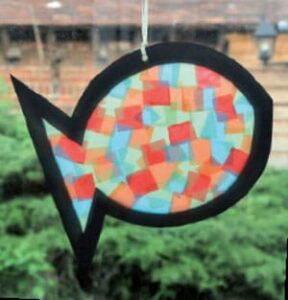
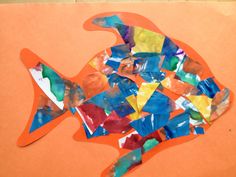
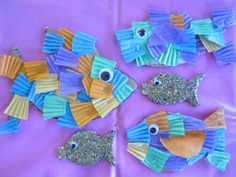
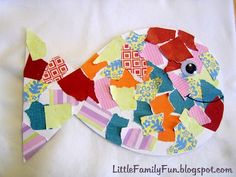
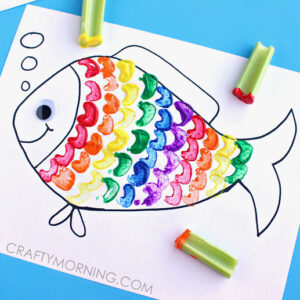
Complete some rainbow fish art! You can create a rainbow fish or a little blue fish or any of the other characters. Here are some lovely ideas: 
CEOP
Parent View - Give Ofsted your view on your child's school
© Holy Trinity CE Primary Academy and Nursery 2026
Shropshire web design by kiskadoo