Long Mynd Zoom Meeting

Hello!

We are planning a class Zoom meeting for next Wednesday!

This will be a great opportunity for your child to see some of their classmates and their teachers. If you don’t already have it, you will need to download the Zoom App first. The meeting will be at 10am on Wednesday the 15th July.

If you don’t already have the app, you will need to download it before the meeting. Following this link to join the meeting and enter the meeting Id and password. Your child will also need a pen and paper as we are hoping to play some games.

We can’t wait to see you!

Meeting ID: 293 362 4186

Password will be sent via Class Dojo, if you can’t access your Dojo account please email longmynd@holytrinitycepa.co.uk and the password will be sent to you.

Wednesday – Hawkstone and Stiperstones home

Good morning Everyone!

It was lovely to see Everyone’s nature pictures and photos yesterday.

Today is investigation 3    Learning Objectives week 1

English – Worksheet03_WILD-ABOUT-CHARACTERS

Think about the characters you would like to use in your wildlife story.

Draw your characters.

t2-t-16815-ks2-take-it-outside-stem-teaching-ideas_ver_3

Choose one of the stem activities to do outside or build a den. Send me some photographs of the chosen activities.

Home Learning – Wednesday 8th July

Hello! I hope you are all well! 

English 

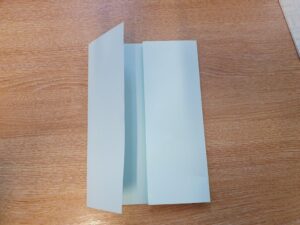
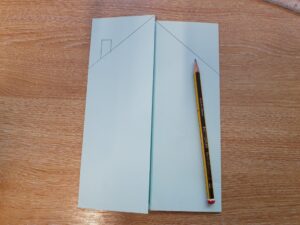
Create your own house! You will need scissors, an A4 piece of paper, a pencil and a ruler. An adult can do this part. 

First, hold your piece of paper horizontally and fold the edges into the middle. 


Second, use a pencil and a ruler to draw a roof onto the front. 


Third, cut out the roof. 
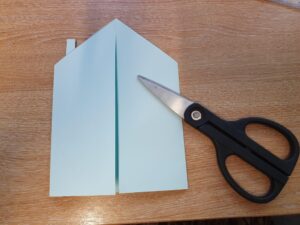


Once you have your house, you can decorate the front to look like your house! 

Mild: 

Think about who lives inside your house. Can you draw a picture of all of the people who live in your house? 

Medium: 

Can you draw all of the people who live in your house and write their names? You could also draw some of the rooms inside your house and write the names of the rooms as well! 

Spicy: 

In the centre part of the house, you can draw and label your family. Turn the house and on the inside of the doors, please write some sentences to tell me all about your house! What does it look like? What does the kitchen, living room and your room look like? 

Don’t forget capital letters, finger spaces and full stops! 

Maths

Today there is only one activity that can be differentiated depending on your child’s needs.

In the story, there is a jumble of sea creatures! They don’t usually go in the same group all together. 

Adult: collect some random items from around your house (for example building blocks, small animals, toy food, some socks, jewellery, toy cars, trains, crayons etc.)

Can your child sort these items in group? How do they sort it? Can they explain why? Do they put all the animals together? Do they sort according to colour?

We do this activity in a variety of way in school because it is a good basic introduction to mathematical ‘sets’. 

To simplify this activity, just choose two or three items and ask your child to tell you which one doesn’t belong in the group or why they are all in a group together. 

To make this activity harder, ask your child to find lots of different ways to sort the same items. 

This is called problem solving and it’s a really important mathematical skill.  

Extra Activity

Go outside with a pot of water and a paint brush. Can you paint a picture on the floor/wall fence with the water? Can you write any words? 

English Home Learning 8th July 2020

Writing Headlines Using Alliteration

Newspaper articles use headlines to attract readers.

Headlines are written at the top of an article, like a title, and hint at what the article will be about.

Newspaper headlines should be short, snappy and grab the reader’s attention.

They do this by:

  • Giving some information about the story.

  • Using powerful words that make an impact.

  • Using alliteration so the title sounds catchy.

  • Using humour to make the audience laugh.

Newspaper cover with several headlines

You are going to use alliteration in your headlines today.

Alliteration is when words close together in a sentence start with the same sound.

For example: Sammy the slippery snake went sliding by.

Visit the BBC Bitesize page to see the videos and activities.

Maths Home Learning 8th July 2020

Add and Subtract Mass

Adding and subtracting mass is the same as simply adding and subtracting normal numbers, but you must remember to put the measurement (kg, g) after the numbers.

The mass of the grapes is 100g.

The mass of the bread rolls is 300g.

I know that 100 + 300 = 400.

The total mass is 400g.

Visit the BBC Bitesize page to see the videos and activities for adding and subtracting mass.

Challenge

Stiperstones and Hawkstone’s Home learning for 7th July

Morning Everyone,

Hope you are well and are enjoying the outdoor activities.It was so lovely to see your faces on screen yesterday.

Spelling – Cursive Handwriting Practice Sheet

Word Search

Learning Objectives week 1 – Maths investigation 2

Challenge Cards maths

Make a beautiful picture from nature or a photo frame. Look at the ideas in the link.

t-tp-2549667-nature-photo-frames-activity-_ver_3

Don;t forget to post me your lovely photographs.


Home Learning – Tuesday 7th July

Good morning everyone!

English

Mild:

Have a go at tracing over these shells and words: Tracing. If you can’t print the sheet, just have a go at drawing your own shell and writing over the words!

Medium:

Crab, Blob and Brush’s shell is too small. They all need special things from their home. Can you think what those things might be?

Can you design a new shell home for the three friends? What would it look like? Would it be special?

Draw a fancy new shell and add labels. Can you write a sentence? Start it off with “The new shell will have… “

Don’t forget capital letters, finger spaces, and full stop!

Spicy:

As above but add an explanation. Why is this design much better than their last shell? Start off with “This shell is the best because…” Try and write more than two reasons as to why it is so special.

Maths

Today we are talking about ordinal numbers. This is being able to use the language of  first, second, third etc. and to be able to put these in the correct order.

Mild:

Have a look at the pictures of Blob, Brush and Crab.

Who lived in the shell first?

Who lived in the shell second?

Who lived in the shell third?


Medium:

Make your own bristle worms. Use your worms to have races. For each race, award the winners 1st, 2nd 3rd. All you need is paper and straws. You can play with all the family to make it more challenging!

Spicy

Make bristle worms and have races just like above. This time, put a timer on for 10 seconds, who can travel the furthest? Add a finishing line – who can complete a race in the fastest time? Make sure you award the 1st, 2nd and 3rd!

Extra Activity

Listen to this super fun and catchy song:


Can you make up your own dance moves? Or even your own words? 

Baby Brush do do do … 

Maths Home Learning 7 July 2020

Comparing Mass

The mass of an object tells you how heavy something is. You use grams (g) and kilograms (kg) to measure mass.

  • Grams are used when you weigh a lighter item, like an apple or banana.

  • Kilograms are used when measuring the mass of a heavier object, like a box of toys or yourself.

1000 g = 1 kg

Top tip

You can use the greater than (>) , equal to (=) or less than (<) signs to help you compare the mass of two objects.

Don’t forget, the tip of the arrow always points to the smaller number.

Top tip

Example 1:

Look carefully at the measurements shown on the scales.

500g of doughnuts and 5kg of fruit

The mass of the doughnuts is 500 g, while the fruit weighs 5 kg. But are the doughnuts or pineapples heavier?

Since both foods are being weighed in different units, it would make sense to convert them so it’s easier to compare. Let’s convert them both to grams.

The doughnuts are already in grams, so you only have to convert the fruit. We know there are 1000g in 1 kg. So:

5 kg = 5000 g

Now you have to compare 5000 g and 500 g – which is the heavier mass?

5000 g > 500 g

5000 g is heavier than 500 g, so the fruit is heavier than the doughnuts.

Example 2:

Look carefully at the measurements shown on the scales.

White shoes 1000g and black shoes 1kg

What do the scales say that the shoes weigh?

The scale with the white shoe points to 1000 g while the black shoe weighs 1 kg.

Just like the last example, it would be easier if you were comparing two measurements with the same units.

Let’s covert 1000 g into kilograms:

1000 g = 1 kg

So the white shoe and the black shoe both weigh 1 kg. Their mass is the same.

Example 3:

Kemi and Mariella both bought a bag of sweets. Kemi’s bag weighed 1300 g and Mariella’s bag had a mass of 1 kg and 500 g. Who had the heavier bag?

Turn the measurements into ones that share the same units.

1300 g = 1 kg and 300 g

It’s now easier to see who has the heavier bag of sweets:

  • Kemi had 1 kg 300 g
  • Mariella had 1 kg 500 g

Mariella bought the heavier bag of sweets.

1300 g < 1 kg 500 g

Visit the BBC Bitesize page to see the videos and activities on comparing mass

Challenge

English Home Learning 7 July 2020

Newspaper Reports

Newspaper reports are printed in newspapers, or published online, to keep us informed about important things that are happening all around the world.

When you are writing a newspaper report, you should:

  • Include a short and snappy headline (title).
  • Write a sentence at the start to sum up what the story is about.
  • Write in the third person (he, she, they).
  • Write in the past tense (as if it has already happened).
  • Use paragraphs to make the text clear and easy to understand.
  • Include quotes (other people’s thoughts and opinions about the subject).
  • Include facts about what has happened using the 5 Ws: what, where, when, who, why?

You could also include a photo with a caption to give the reader more information.

It’s important not to confuse facts and opinions when you’re writing a newspaper report.

Facts are the true details about what has happened. They can be researched and proved to be correct.

For example: Russia is the largest country in the world.

Newspaper reports contain lots of facts. One way they do this is by answering the 5 Ws: what, where, when, who, why?

Opinions are what people think. People can have lots of different opinions and often disagree with each other.

An example of an opinion could be: Chocolate ice cream is tastier than strawberry ice cream.

When you include an opinion from someone in a newspaper report, you should put it in inverted commas (speech marks) and name the person who said it. This makes it clear that it is what someone believes and is not a fact.

Several newspapers
 Visit the BBC Bitesize page to see the activities and videos on Newspaper writing.

Zoom Thank You!

I just wanted to say a huge thank you to those who joined the Zoom meeting this morning. It was lovely to see everyone. I will arrange another for next week.

CEOP
Parent View - Give Ofsted your view on your child's school
© Holy Trinity CE Primary Academy and Nursery 2026
Shropshire web design by kiskadoo