Monday 13th July Stiperstones and Hawkstone’s home learning

Good morning

Hope you all had a lovely weekend.

We are on the last week of school.

We are continuing with our outdoor theme this week.

Maths – Fragonwood-Shapes-in-wood

We all need to know the names and properties of all these shapes.

English – Continue with the plot of the story and the problems that you outlined in your planning.

Painted leaves – be creative with the leaves that you find outside.

Have a great day!

Home Learning – Friday 10th July

Hello!

Well done for getting to the end of another week!

English

Mild:

What was your favourite part of the story? Can you draw a picture of the scene? Can you have a go at writing the names?

Medium:

We are going to do a book review of the story “Sharing a Shell”.

Can you answer these questions? Try and use a super sentence for each of them!

  • What happens in the beginning of the story?
  • What was your favourite part of the story?
  • Who is your favourite character?

Don’t forget capital letters, finger spaces and a full stop!

Spicy:

We are going to do a book review of the story “Sharing a Shell”.

Can you answer these questions? Try and use a super sentence for each of them!

T-T-12728-Sharing-a-Shell-Book-Review-Writing-Frame

Don’t forget capital letters, finger spaces and a full stop!

Maths

To finish our home learning on a Fun Friday, we are going to sing some lovely Maths counting songs!

Extra activity

Can you have a go at moving like some sea creatures? 

Have a go at moving like a:

  • Jellyfish
  • Crab
  • Bristle Worm
  • Sea Anemone 
  • Shark
  • Clown Fish
  • Squid

Have a lovely weekend and stay safe! 


Friday 10th July Stiperstones and Hawkstone’s homelearning.

Gosh it’s the end of the week already! It wasn’t really the week to be doing lots of outside activities we had all planned to be doing in this awful summer weather, but most of you managed to get lots of out door learning done. Well done! Looks like a better day today.

English – You have managed to plan all of your story now, so I am looking forward to reading the introduction – which should include the first four sections of your planning. The beginning, the setting, the characters and perhaps the problem.

Maths – Try out investigation 6 now.


This afternoon – you could have a got at making a leaf basket. Perhaps collect some flowers to arrange in your basket.

Have fun x

Maths Home Learning 10th July

Challenges

See if you can answer all of these challenges!

Challenge 1

Sam has some red and yellow cubes.

She has 20 cubes in total.

She has 8 more yellow cubes than red ones.

How many red cubes does she have?

Sam stood next to a red cube and yellow cube.
Grey line

Challenge 2

Jon thinks of a number.

Jon says that half of his number is 12.

Half of his number is 12.

What is one third of Jon’s number?

Grey line

Challenge 3

A cup contains some coffee.

Sasha drinks 2/5 of the coffee.

There is 120 ml of coffee left.

How much coffee was in the cup at the start?

A ceramic cup.
Grey line

Challenge 4

A cube weighs 87 g.

One orange cube.

Two of the same cubes and a cone weigh 291 g.

Two orange cubes and a yellow cone.

How much does one cone weigh?

To see the answers please visit the BBC Bitesize page and scroll down.

English Home Learning 10th July

Bitesize Daily Book Club:

Be Amazing! An inspiring Guide to Being Your Own Champion by Sir Chris Hoy

Be Amazing! An inspiring Guide to Being Your Own Champion

As a boy, Chris didn’t believe that he would achieve his dream of becoming an Olympic champion. However, he grew up to be a six-time gold medal winner. He shares everything he has learned on his journey to success and hopes that by telling his story, he will inspire young people to be the very best they can be.

Visit the BBC Bitesize website to see the videos of Chris Hoy and learn more about him.

English Home Learning 9th July 2020

Revising Word Types

he four main word types are nouns, adjectives, verbs and adverbs.

You have learnt about these in previous lessons. Today you will be revising them.

Nouns

Nouns are what we call the names of things, objects, places and people.

There are common nouns.

  • For example: chair, dog, pencil

As well as proper nouns.

  • For example: Hannah, Spain, Mr James
A smart-looking poodle dog

Verbs

A verb is a word used to describe an action, state or occurrence.

Here are some more examples of verbs.

  • Action (doing something)

The rabbit was jumping in the field.

  • State (being or feeling something)

The monster likes rollercoasters.

  • Occurrence (something happening)

The caterpillar became a butterfly.

When writing, make sure every sentence includes a verb.

The caterpillar became a butterfly

Adjectives and adverbs

Adjectives and adverbs are describing words.

Adjectives

An adjective is a word that describes a noun.

For example:

  • It was an exciting movie.
  • The sand on the beach was soft.
  • He ate some hot, salty chips.

Top tip!

When you have a list of adjectives you need to separate them with commas.

A sandy beach

Adverbs

An adverb describes a verb.

For example:

  • He ate his breakfast quickly.
  • They slowly dipped their toes into the pool.
  • Quietly, he crept downstairs.
He ate his breakfast quickly
Visit the BBC Bitesize Page to see the videos and activities.

Maths Home Learning 9th July 2020

Measuring Capacity

Remember

  • Capacity is the amount of liquid a container can hold.

  • Volume is how much liquid is in the container.

We can measure both in millilitres and litres.

Remember

Measuring in litres and millilitre

A litre is much more than a millilitre.

1 litre = 1000 millilitres

We shorten litres to ‘l’ and we can shorten millilitres to ‘ml‘.

So we might also say:

1 l = 1000 ml

Practise

Activity 1

What’s left in the house?

Find as many containers in your kitchen as you can that are holding liquids, such as a bottle of milk or squash.

Check how much liquid they hold when they are full (you should be able to find this on the packaging.) Estimate how much liquid is left in each container.

If possible, use a measuring jug for each to check your estimates.

Maths with Parents logo
Different containers

Activity 2

Drinks time

Using a measuring jug, make yourself a drink. For example, you could use the recipe below:

  • ½ litre orange juice
  • 50 ml cranberry juice
  • 200 ml water
  • 5 ml lemon juice

Why not adapt this recipe to use the drinks you have at home?

 Visit the BBC Bitesize page to see the video on measuring capacity.

Home Learning – Thursday 9th July

Howdy!

English

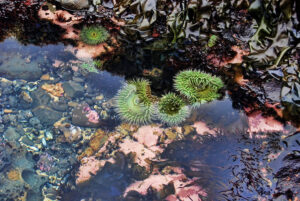
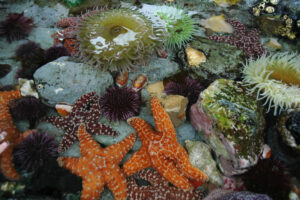
Crab, Blob and Brush would normally all be found in a habitat called a rock pool. 

Mild: 
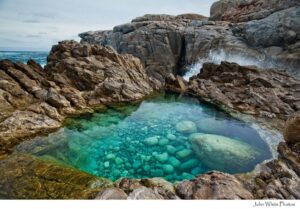


Have a look at these pictures. What can you see? Can you say the name of any of these creatures? Choose one or two and find out what they are! Can you find out all about them? Watch some videos all about them! 

Medium: 

Who else lives in a rock pool? Can you write a list of all the animals you might find in a rock pool. Remember, words in a list go one underneath the other. 

Spicy: 

Write the list from above and choose three creatures to research. Write a sentence or two about each of your chosen creatures. 

Maths

Make skittles using empty plastic bottles or cardboard tubes. You could draw faces on them or decorate them to look like sea creatures! Use a soft ball or balled up socks to knock them down.

Mild: 

How many have you knocked down? How many are left? 

Medium: 

Can you double the number that you have knocked down? 

Spicy: 

Can you write the number sentence for the doubled number? For example, if you knock over three, the number sentence would be 3 + 3 = 6. 

Cheeky challenge: Can you add up all of your totals?

Extra Activity

Look on a map or go on google maps. Can you find the location of your nearest beach. How would you get there? How long would the journey take? Can you plan your journey?


Thursday 9th July Stiperstones and Hawkstone’s home learning.

Good morning Everyone

Hope you are all okay?

Take a look at investigation 4 today Learning Objectives week 1

English – Worksheet04_WILD-ABOUT-PLOT 

Now you have thought about your animal character, you can complete worksheet 4 – planning your plot to your story.

This afternoon we are going to engage in some fun activities.

The second activity is to complete an outdoor alphabet treasure hunt. What objects can you find outside with each letter of the alphabet?

a  =   acorn

b =  bush

Can you complete the whole alphabet? You may have difficulty with certain letters such as Q and Z

Have a great day!!!!

Clee Zoom Meeting

Please join us for another Zoom meeting!

The meeting is scheduled for Wednesday 15th July at 9.30am


https://zoom.us/j/98415641105?pwd=WWN6dEhWYWE0VkJEck5FV1U0eEdmUT09

Meeting ID: 984 1564 1105

Password: 0ytD6L

It would be lovely if everyone taking part draws a picture of a beautiful rainbow to show their friends. I will also read everyone a story.

It would be great to see as many of you as possible!

CEOP
Parent View - Give Ofsted your view on your child's school
© Holy Trinity CE Primary Academy and Nursery 2026
Shropshire web design by kiskadoo