Year 5 English ( similes and metaphors) Maths (add and subtract fractions where the total is within 1. )

English  – Learn how to use similes and metaphors

https://www.bbc.co.uk/bitesize/articles/z4nybdm

What is a simile?

A simile describes something by comparing it to something else, using the words like or as.

Examples

  • The snake moved like a ripple on a pond.
  • The jelly was as slippery as an eel.
  • Jess was graceful as a gazelle.

What is a metaphor?

A metaphor is a word or a phrase used to describe something as if it is something else.

Examples

A wave of terror washed over him.

The terror isn’t actually a wave, but a wave is a good way of describing the feeling.

Jess is dynamite.

She’s not made of dynamite, but it’s a way to explain how exciting she is.

Maths –

In this lesson you will learn how to add and subtract fractions where the total is within 1.

https://www.bbc.co.uk/bitesize/articles/z42vgwx

We will start by remembering two skills we have used before:

A: Adding fractions with the same denominator

B: Finding equivalent fractions

Make sure you feel confident with these skills. We’re going to use them to find the solution to addition and subtraction problems where the fractions have different denominators.

Throughout these activities and the independent practice questions, if you want to draw your own diagrams to begin with, that is fine. The idea is that once you have worked with the diagrams a few times and become confident with the methods, you won’t need to draw the diagrams every time!

Year 4 English (Fact and Opinion) and Maths (tenths and hundredths)

I hope you all had a lovely weekend and spent quality time with friends and family.

This week we will be taking our learning from BBC BITESIZE for Maths English.

English – To understand the difference between fact and opinion.

https://www.bbc.co.uk/bitesize/articles/zkvg47h

Facts can be supported by evidence whereas opinions are based on thoughts and feelings.


Facts

  • Facts are definitely true.

  • They can be backed up with evidence.

For example: The Prime Minister is giving a speech.

Opinions

  • Your opinion is how you feel or what you think about something.

  • Other people might think differently or have a different opinion.

For example: Having a teenager as Prime Minister is a terrible idea.

Maths – Learn about tenths and hundredths and how to write and compare them as fractions.

https://www.bbc.co.uk/bitesize/articles/zb98wty

One tenth is one part of ten and is written as a fraction like this ¹/₁₀ . The denominator is 10.

One hundredth is one part of 100 and is written as a fraction like this ¹/₁₀₀ . The denominator is 100.

41 hundredths is four tenths and one hundredth and is written as a fraction like this ⁴¹/₁₀₀ .

This whole-part model shows how 41 hundredths can be partitioned.

CLASSICS – FILM CLUB

This week I would like you to watch a selection of classic films if you have access to certain sites like Netflix or Amazon Prime or even on DVD.

Below is a list of recommended film:

Mary Poppins- 1964 U

The wizard of Oz -1939 U

Willy Wonka  and the chocolate factory – 1971 U

Annie – 1982 U

Snow white and the seven dwarfs -1937 U

Hook-1991 U

Chitty chitty bang bang -1968 U

Labyrinth -1986 U

Honey I shrunk the kids -1989 U

The neverending story – 1984 PG

If you have access, the first suggested film is ‘ANNIE’.
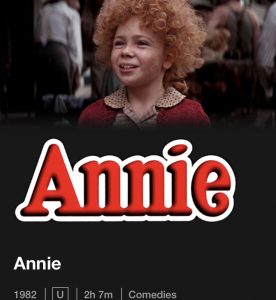
By the end of the week you may have watched a selection of classic films! The aim is to introduce yourselves  to films you may not have thought about watching.

Have fun!

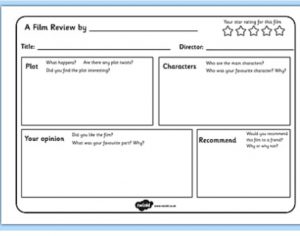
Like film club, we can discuss the films, please send me a film review to hawkstone@holytrinitycepa.co.uk

 

Home made games

There are 2 home made games I am posting that you can make at home

1- Twister. You will need chalk or coloured card and a dice!

The aim is to have 4 different coloured circles, 6 of each. (See above) make a board where you have a spinner. ( see above) You roll the dice and it lands on a colour and body part. The aim is to stay standing.


2- Hands and feet

A bit like and obstacle course. Draw around your hands and feet 6 times. Place them out in a row and go down the line. Time yourself – see who can be the quickest.

REMEMBER HAVE FUN!!!

What a week! Well done all.

I just want to say well done to all working at home, at times it can be hard to focus and complete work. You are all doing a fantastic job and I am proud of you all!

well done to Emily and her wonderful work with her snails ? and snail facts!

Well done to Lauren and her beautiful painting at different times of the day.

Well done to Alex for his wonderful creation work ( set by Mrs Price).

Year 5 Maths and English

Math –  Learn how to compare two or more fractions, sorting them from least to greatest.

https://www.bbc.co.uk/bitesize/articles/znk4kmn

These activities will teach you to compare fractions, even when the denominators are not the same.

We will use diagrams to help show how the fractions compare, but the most important skill will be to think carefully about the numerator and the denominator.

Remember, the numerator is the number that appears on the top of a fraction. The denominator is the number that is on the bottom.

English – Learn how to write a recount.

https://www.bbc.co.uk/bitesize/articles/zk3tpg8

How to write a recount

  • Write your recount in the first person because it happened to you!

I zipped up my spacesuit before leaving the rocket.

  • Use the past tense because it has already happened.

I had trained for years!

  • Clear structure. Use paragraphs to separate the beginning, middle and end. Your middle section should include at least three events or experiences.

  • Recounts are written in the order in which they happened (chronological order). Use time conjunctions like firstly, next, then and finally to show this.

  • Using description to add detail will enable your reader to build an image in their head.

The slender body of the rocket stood high above the crowd.

  • It is important to share your feelings about what happened throughout your recount.

My hands trembled with uncontrollable nerves as the engines ignited!

  • Use emotive language so the reader understands your point of view.

I felt like I had ran a marathon when I climbed back in the rocket.

Year 4 Maths and English

Maths – Learn how to find the area of a shape by counting the squares within it.

https://www.bbc.co.uk/bitesize/articles/zjf2xyc


If you have squared paper this might be easier than using plain paper.

English-  To improve writing using proof reading skills.

https://www.bbc.co.uk/bitesize/articles/zmcsy9q

Proofreading is the process of looking through your work, finding mistakes and correcting them. It’s a very important part of the writing process.

Most authors, even famous ones, check and rewrite their stories many times before they are happy to let someone else read them.

Watch this short clip to learn more about proofreading.

Top proofreading tips

  • Once your story is finished, read it to yourself.

  • Pretend that someone else wrote the story, see how well you think the story is written and then rewrite it to make it better.

  • Use conjunctions to make your sentences flow and make sense.

  • Double-check your facts.

  • Look out for spelling, grammar and punctuation mistakes.

  • Look for words or sentences that you can make better by choosing different vocabulary, adding description or adding adverbs.

I have added an adverb song to remind and help you.

Home Learning – Year 5 English, Maths and Reading Comprehension

I am adding 2 Maths lessons in case you missed it yesterday.

https://www.bbc.co.uk/bitesize/articles/zv798xs

Maths –

  1. Learn how to use multiplication and division (the abstract method) to find equivalent fractions.

2. Learn how to write a number as an improper fraction and a mixed number.

https://www.bbc.co.uk/bitesize/articles/z4ypscw

English – Learn how to structure a debate argument.

https://www.bbc.co.uk/bitesize/articles/z7pj7nb

Writing debates

A debate is a formal discussion about a subject where people have different views.

Different facts and opinions are presented by each side during the discussion.

Key features of a debate argument:

  • an introduction
  • facts to support each point
  • formal language
  • emotive language
  • rhetorical questions
  • repetition
  • a counter argument
  • discourse markers or conjunctions to connect paragraphs
  • a strong conclusion

Example

Let’s apply these key feautres to the following argument:

‘Should animals be kept in zoos?’

This is an argument against animals being kept in zoos:

  • Introduction – Animals should live in the wild.

  • Facts – Zoos cannot provide the amount of space animals have in the wild.

  • Formal language – It is always important to consider animal wellbeing.

  • Emotive language – Many cages are cramped, dirty and in terrible condition.

  • Rhetorical questions – Would you like to live in a cage?

  • Repetition – Repeat your main argument after making each point.

  • Counter argument – Some will say animals are happy in a zoo, but do we truly know?

  • Discourse markers/conjunctions – for example, however, in addition or as well as.

  • A strong conclusion.

Reading Comprehension –

Y5 6 Olympics questions

Y5 6 Olympics questions ANSWERS

I am in school Thursday and Friday if anyone needs any packs of has any questions. Keep safe.

Home Learning – Year 4 English, Maths and Reading Comprehension

I am adding 2 Maths lessons from BBC BITESIZE as they will follow on from each other.

  1. Work out the perimeter of a rectangle, even if you don’t know the length of all four sides.

https://www.bbc.co.uk/bitesize/articles/zbcnf4j

Learn

Calculating perimeter

The perimeter is the distance all the way around the outside of a 2D shape.

To work out the perimeter, add up the lengths of all the sides.

2. Learn how to find the perimeter of a rectilinear shape.

https://www.bbc.co.uk/bitesize/articles/zkhwqp3

English To write a diary entry based on a person in history.

https://www.bbc.co.uk/bitesize/articles/zmmj7nb

Learn

This film tells the true-life story of Grace Darling, including her heroic efforts to rescue the survivors of a shipwreck during a storm. The film is appropriate for the age group, but as every child is individual, parents may wish to watch ahead of, or with, their children if they are concerned by the content outlined.

Watch the following clip to learn about the story of Grace Darling.

She was the daughter of a lighthouse keeper who heroically risked her life to rescue some strangers who had been shipwrecked.

You will be writing a diary entry about this

memorable day later in the lesson.

A diary entry is a form of recount in which the writer explains what has happened to them.

Here’s a checklist of the key features to use when you write a diary entry.

  • Start with ‘Dear Diary’.

  • Describe the places where the events happened.

  • Write in the past tense.

  • Use pronouns like I, my and me to show that the events happened to you.

  • Talk about how you were feeling or what you were thinking when each event happened.

  • Use interesting vocabulary.

Reading Comprehension

Y3-4 The Enchanted Sword

I am in school Thursday and  Friday if anyone needs any more packs or ha any questions. Keep safe.