Wednesday 20th January. Earls Hill Swans (Year 1 ) Maths

Here are the songs from yesterday to remind your child about the greater than, less than and equals symbols and what they mean.


Please watch this video with your child. It asks you to pause at certain points. Please do this and talk through the questions with your child. I have put the link to the work sheet below the video link for you to print out if you can. I have also put pictures of the worksheet so you can work off those if that is easier.

Aut1.12.2 – Compare numbers on Vimeo

https://resources.whiterosemaths.com/wp-content/uploads/2019/10/Y1-Autumn-Block-4-D6-Compare-numbers-2019.pdf 


Please repeat the practical activity from yesterday to reinforce this concept.

To change the game slightly you could use the 100 square from your resource pack. Point to a number, ask your child to say the number and write it down. Then point to a different number, ask your child to say the number and write it down. Then ask them to decide what symbol they need, the greater or less than symbol and place it in between the two numbers they have written.

Online Phonics Sessions


Read, Write, Inc. Phonics sessions

Daily Read, Write, Inc. phonics session films will be available at 9.30am from Monday to Friday.

Each film is approximately ten to fifteen minutes long and will be available on
YouTube for 24 hours during school closure.

Daily films:
• Set 1 Speed Sounds, Word Time and Spelling: for children in Reception
and children who are new to English.

• Set 2 Speed Sounds and Spelling: for children in Year 1 and 2 (and those in
Reception that can read Set 1 Speed Sounds.)

• Set 3 Speed Sounds and Spelling: for children in Year 1 and 2 that can read
Set 2 Speed Sounds.

• Read longer words: for children who can read Set 3 sounds and words
confidently.

• Read Red Words 1: for children who are reading Red, Green, Purple, Pink
and Orange Read Write Inc. Storybooks. Many children are able to read these
in Year 1.

• Read Red Words 2: for children who are reading Yellow, Blue and Grey
Read Write Inc. Storybooks. Many children are able to read these in Y2.

• Read and Hold a Sentence 1: reading and writing practice for children
reading Green, Purple, Pink and Orange Read Write Inc. Storybooks. (For
children reading and writing with Set 1 sounds confidently and learning Set 2
sounds.)

• Read and Hold a Sentence 2: reading and writing practice for children
reading Yellow, Blue and Grey Read Write Inc. Storybooks. (For children
reading and writing words with Set 2 sounds confidently and learning Set 3
sounds.)

All films will be in separate categories on the YouTube channel.

The schedule can be downloaded here:

ruth miskin schedule

If you have any further questions please don’t hesitate to contact your class teacher via classdojo.

Tuesday 19th January 2021. Literacy home learning for Clee Class and Earls Hill Reception (Cygnets)


Good morning Reception children and families!


Our Literacy work is continuing with the story ‘What We’ll Build’ by Oliver Jeffers.

Here is the story read by Miss Wright for you to watch again:


Today we are going to carry on from the work we did yesterday about emotions. These are the pictures from the story that we will be talking about:

What We'll Build - Oliver Jeffers - Black Bough | Ludlow

What We'll Build by Oliver Jeffers (HarperCollins)


For a while now things have been very different; some of you are coming to school and some of you are staying at home. This means that you don’t get to see some of your friends or the teachers in school and you probably miss them like I miss seeing all of you in school. Lots of you may not have seen your family for a long time. Some of you may not have been able to visit the places where you like to go, like the Fun House or Park Hall Farm. Sometimes this makes us feel a little sad. Many of you will be happy that you are able to stay at home with your family and do lots of fun things in your house.

Today I would like you to talk to your grown up at home about someone or something that you miss; it might be your friend, your nanny, your teacher or something else. I would like you to talk about why you like them, how they make you feel and the kinds of things you like to do together. Then I would like you to find some photographs or draw some pictures of you together and make a little book about it. You can share what you’ve done either by taking a photograph or your grown up can record you and send it to me on the class email or Dojo.


Here are some Phonics games you can play:

This one is about blending:

https://www.phonicsplay.co.uk/resources/phase/2/pick-a-picture

Phonic Pop helps with sound recognition

https://www.ictgames.com/phonicsPop/

Tuesday 19th January – PE Activity

This afternoon I’d like you to get active! Warm up by joining in with the Callum’s PE session.


As you are learning about Noah’s Ark, which is a story with lots of animals in it, here is a lovely safari yoga session for you to join in with.

Tuesday 19th January Earls Hill Swans (Year 1) Maths

Last week we looked at the more/greater than and less than symbols. Some of you have been in touch to say that your child is finding it tricky to remember which symbol to use. We will recap the symbols and how to use them today. Here are two catchy songs to listen to which help teach this concept.


These are the symbols we use when working on more/greater than, less than, and equals to.

  • The first symbol means equal to. The amount written on both sides of the equal symbol will be the same. For example, 14 = 14, or 10 + 4 = 14, or even one ten and four ones = 14. In all of the examples I have written, the amount on both sides of the = symbol is 14.
  • The middle symbol above means ‘less than’. Whatever number you write to the left of this symbol must be less than the number written to the right of it. For example, 14 <15, or 10 + 4 < 15, or one ten and four ones < 15. All of these mean that 14 is less than 15. The amounts written to the left of the symbol, in this case 14 is less than the amount written to the right of the symbol, 15.
  • The final symbol above means ‘more’ or ‘greater’ than. Whatever number you write to the left of this symbol must be more or greater than the number written to the right of it. For example, 15 > 14, or 15 > 10 + 4, or 15> one ten and 4 ones. All of these calculations show that 15 is more than or greater than 14.

This picture might help you to remember.

Children often find it useful to imagine a hungry alligator with an open mouth!

The hungry alligator always eats the bigger number. So the ‘open’ mouth will always face the bigger number, the number that is more/greater than the smaller number.

Have a go at completing the practical activity I demonstrated in the video. Write a more /greater than symbol ( <) on a piece of paper and a less than symbol (<) on another. Ask your child to pick two number cards from the 1 -20 set provided in your resource pack. Place them on the floor or table with a space in between. Which symbol should they put in the space, the more than/greater symbol, or the less than symbol?

The photo below demonstrates what I am asking you to do, although the child is using larger numbers. If your child is confident at recognising and using larger numbers you could also extend the activity in this way.

The child has used the symbol correctly to show that 95 is more than/greater than 42.

95 > 42.

Try this activity now. Write out the numbers below and ask your child to fill in the missing symbols, > < or =.

Here are the answers.


This is a game your child can play to reinforce what we have been learning about today.

https://www.softschools.com/math/greater_than_less_than/alligator_greater_than_game/ 


Tuesday 19th January – Swans (Year 1) Literacy

Good morning everyone!

Here is our story again.

Look at this picture from the book

It talks about a safe place, a favourite place.

Today we are going to be talking about our favourite places. One of my favourite places is my living room, with my dogs next to me! Do you have a favourite place? Tell your grown up about your favourite place.

Maybe it is a sunny beach:

Perhaps it is in your garden?

Or maybe it is snuggling up on the sofa to watch your favourite TV program!

Today, I would like you to think about your favourite place. Why is it your favourite place? Are your favourite people there? Does it have good things for you to do? Do you feel safe and cosy there? Perhaps you have happy memories of the place?

Please write, telling me about your favourite place. Start with

My favourite place is…… and then tell me why.

You could use the connecting word ‘because’ in your work. Don’t forget what we talked about in our sentence writing yesterday. Remember your capital letters, finger spaces and full stops. Use Fred Talk and your sound mats to make your writing as accurate as you can.

Your work might look like this.

Once you have done your writing, please draw a picture of your favourite place.

I can’t wait to hear all about your favourite places.

Today I’d also like you to practise reading and writing the Red Tricky words that were sent home in your pack.

Play these Phase 4 phonics games.

https://www.phonicsbloom.com/uk/game/odd-and-bob?phase=4 

https://www.phonicsbloom.com/uk/game/sentence-substitution?phase=4 


Monday 18th January 2021. Maths home learning for Clee Class and Earls Hill Reception (Cygnets)


To start our maths today we are going to join in with some counting songs:


This week the maths home learning is going to start by learning about more and fewer.

For any children who may find this a little tricky please scroll down to the bottom of this page and there is some home learning about the number 1.

You will need these resources to help you with the lesson:

  • 3 pieces of paper or card
  • a pencil
  • scissors
  • small objects (Lego pieces, blocks, coins, buttons, pieces of dry pasta, small toy animals etc.)

First I would like you to draw a shape onto each piece of paper; 1 triangle, 1 square and 1 circle. I would like you to cut them out. 

I would like you to estimate (guess) how many toys (e.g. plastic superheroes) you think you can fit into the circle? Write down your guess.

Now put the objects into the circle and count them. Did you guess right?

Do you think you can fit more or fewer objects into the triangle? Tell your grown up why  you think this? Then put as many objects as you can fit into the triangle. Did you fit in more or less? Did you guess right?

Now I would like you to do the same with the square.


Here is a game for you to play about more:

https://uk.ixl.com/math/reception/more

And fewer

https://uk.ixl.com/math/reception/fewer


This link is for any children who need a little more help and support with learning about early numbers. Today the learning is about recognising, counting and representing the number 1

https://whiterosemaths.com/homelearning/early-years/its-me-1-2-3-week-1/

Monday 18th January – Noah’s Ark Work

Here is a video of Miss Jones reading the story Noah’s Ark.

Noah and his family took two of every type of animal and travelled all around the world on their ark.

This reminds me of another story about animals who travel the world. It is one of my favourite stories. It is called ‘The Snail and the Whale’ and it was written by Julia Donaldson. The snail crawls onto the tail of the whale and they travel together around the world seeing amazing sights and having great adventures. Here is the story.

Today I’d like you to imagine that you are going on a journey around the world. Think about where you would like to visit. Do you have a favourite place? Would you like to visit hot countries like this?

Would you visit a cold country like this?

Ask your grown up to help you explore some of these places, either by looking at books or researching them on the internet.

Here is a link to an online atlas.

https://kids.britannica.com/kids/browse/atlas 

Draw a map, showing the places you will visit and the route you will travel. It might look a little bit like these maps.


Ask your grown up to take a photo of your work and send it to me on dojo, so that I can see your travel map.

Swans/Year 1 – I’d like you to extend this activity by writing a list of things you will need to remember to pack and take with you on your epic journey around the world! You will need clothes, food and drinks, soap, toothpaste and more. What things  will  you need to pack?

If you are visiting a cold country, you will need to pack some extra things – what might they be?

If you are visiting a hot country, you will also need to pack some extra things – what might they be?

Use your Fred Talk to carefully sound out and write your packing list. Send me a picture so that I can see your amazing work!

Monday 18th January – Swans (Year 1) Maths

Last week we looked at making 2 digit numbers using tens and ones. We used our tens frames and counters to make 2 digit numbers.

We also watched these videos. Here they are again, along with the accompanying worksheet, if you and your child want to revise the content again.

https://vimeo.com/480324356  

https://resources.whiterosemaths.com/wp-content/uploads/2019/10/Y1-Autumn-Block-4-WO3-Tens-and-ones-2019.pdf 

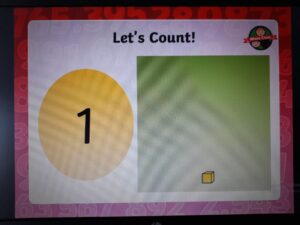
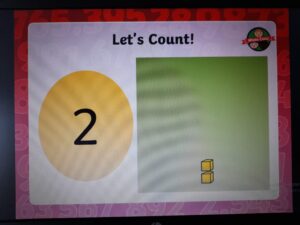
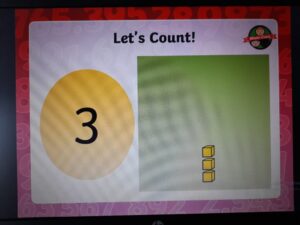
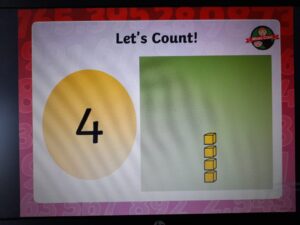
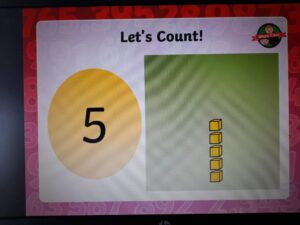
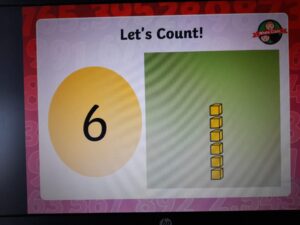
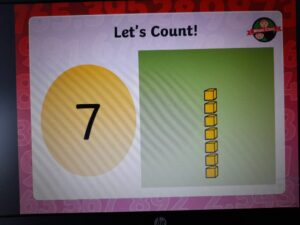
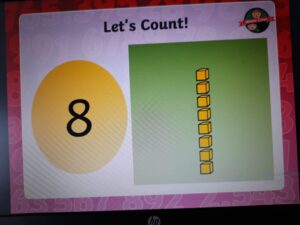
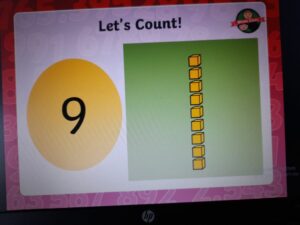
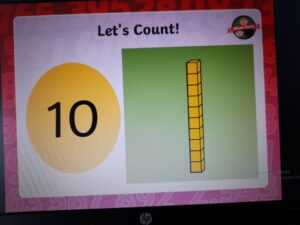
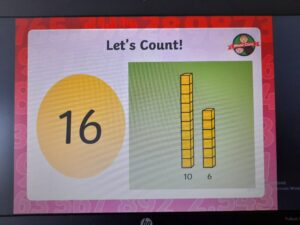
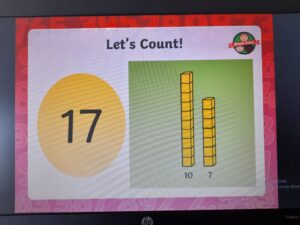
These slides show us how we can use cubes to make 2 digit numbers too. Let’s count together.
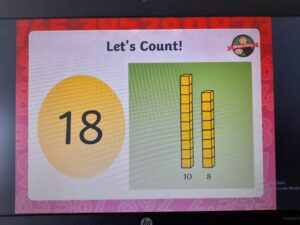
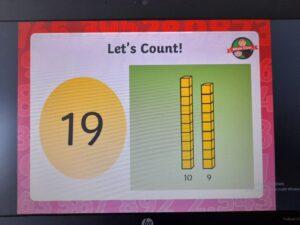
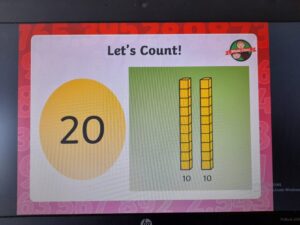
Can you see what happened to the ten cubes? They have joined together to make a ten. 10 ones is equal to 1 ten.  Now we have 1 ‘ten’ lets make another. Let’s carry on counting. Grown ups please emphasise how the 2digit numbers are made up. I have written what to say under the next few slides.
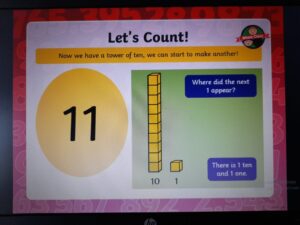
1 ten and 1 one equals 11
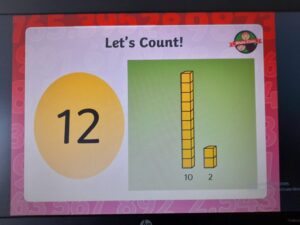
1 ten and 2 ones equals 12
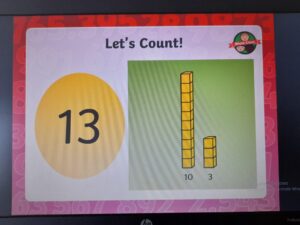
1 ten and 3 ones equals 13
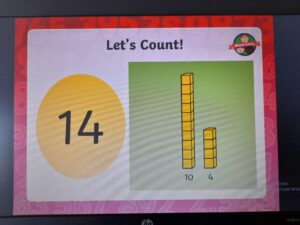
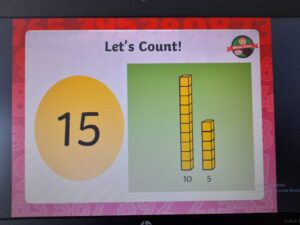
2 tens equals 20.

10 + 10 = 20

We can count in tens, Each time adding on ten more

10,20,

This video will also help to explain the concept to your child.

Here are some interactive games for your child to play to reinforce the concept of 2 digit numbers being made of tens and ones.

IXL – Count tens and ones – up to 20 (Year 1 maths practice)

IXL – Show numbers on ten frames – up to 20 (Year 1 maths practice)

This game is about counting up to 100.

the snail game board

You will need the board which you can download here, an ordinary dice and a pair of matching counters for each player.

  • You could copy a simple version of this snail if you cannot print it off,
  • You could use your number cards to six and pull one out of a bag instead of rolling a dice, if you do not have a dice, or follow this link for an online dice
  • https://www.random.org/dice/?num=1
  • For counters you could use coins, small toys, buttons, cereal pieces such as ‘Cheerios’ or even pieces of pasta!

How to play the game:
To start put both your counters on “0” – which is the snail’s eye!

The first player throws the dice and moves one of their counters that number along the snail’s body. Take turns at throwing the dice.

After you get to “9” the first counter goes back to “0” and the second counter goes onto “1 ten”.

Go on moving the first counter along the snail’s body and moving the second counter to the next “ten” every time you get to the end and go from 9 to 0.

The winner is the first to reach “100”.