English Home Learning 4th June 2020

Revising apostrophes for possession

You have learnt about using possessive apostrophes in a previous lesson. Today, you’re going to revisit this important skill.

If you missed the previous lesson, you can take a look at it here.

Remember: A possessive apostrophe shows that something belongs to or is connected to something else.

John‘s football was on the roof.

The ball is owned by john and so when talking about it in the same sentence as John we use his name and a possessive apostrophe (‘s).

Visit the BBC Bitesize Website to see the videos and activities.

Science bubbles

Good morning Ercall, I hope you are all well. Today I’d like you to continue with the maths and English tasks and any fun bubble activities you can see. I will attach some bubble ideas 🙂
Science
Questions to prompt children to explore/ experiment with bubbles:https://www.youtube.com/watch?v=JjX4PKBt96k&vl=en-GB
Can you make bubbles just with water? Do bubbles last longer in the shade or in the sun? On a dry surface or a wet surface? Do bubbles make shadows? What colours can you see in a bubble? Can you make a pointy bubble or a cube-shaped bubble? Can bubbles go underwater? Are smaller bubbles always stronger than bigger bubbles? Could a person float inside a bubble? Why/ why not?
Can you catch a bubble?
Make the bubbles. How long can you keep the bubble up?
Does it matter about the size?
Can you from you new investigation?
https://www.youtube.com/watch?v=eIEl7VODLxQ
Investigating bubble snakes.
How long can you make your snakes.?
Does it make a difference with the size of the bottle?
Does it make a difference with the shape of the bottle?
:https:www.youtube.com/watch?v=Bhp_jSAV5Dg
https://www.youtube.com/watch?v=zT1qPwspMRk

Have fun!

Home Learning – Thursday 4th June

Good morning everyone!

I hope everyone is doing well! I can see most of us are getting back into the swing of home learning again which is fantastic to see. There is some brilliant work coming in!

English

Today we begin our recounts! Your story boards were fantastic! Now what you need to do is write a sentence for each box. Use your pictures and your photos to help you. Make sure you use your neatest handwriting, finger spaces and full stops.

Year 1:  This is a recount so you need to use time words to show the chronological order. First, next, then, after that, later, finally, lastly. You don’t have to use all of them but make sure your sentence starts with one that makes sense and is in the right order.

You can use the same layout as your storyboard or you can just write down the page like normal. It’s completely up to you!

Maths:

Year 1: Bitesize

Reception:

Today is going to be a tricky Maths activity! I hope you’re up for a challenge!

Sometimes our patterns come in different sizes and they get repeated. I need you to complete these patterns for me. Level 3 might have some problems. If it has a problem, write what the problem is underneath.

There are three levels: Levels 1 and 2 are much simpler. Level 3 is harder. Chose either 1 or 2 and then have a go at 3.

Complete the patterns 1

Complete the patterns 2

Complete the patterns 3

Extra activity

Did you know you can tell how old a try is? Every year, a tree grows wider. If you cut a tree in half, you can count the rings inside to see how old it is! Obviously we can’t do that! So I would like you to find a tree and measure it. You can use anything to measure it (but a tape measure would be best!). On average, a tree grows 2 and a half centimetres every year. Adults, can you help the children work out how old a tree is?

When you’ve found out how old one tree is (it can be a really thin one to make it easier) you can guess whether the trees are really old or really young! Have a look at these trees. Can you guess how old they are?


If it starts to rain like it did yesterday, here are some more fun activities to be done inside:

Thursday Hawkstone and Stiperstones Home learning!

Morning Everyone!

I was so impressed with your Maths work yesterday. We did it in class as well. Remember the 4 as a whole = 4/1 X 2/3 = 8/3 = 2 2/3

So we are carrying on with multiplying a fraction by a whole number.Watch the video carefully first. play the game and then try the worksheet!

https://kids.classroomsecrets.co.uk/resource/multiply-mixed-numbers-by-integers-video-tutorial/

https://classroomsecrets.co.uk/multiply-mixed-numbers-by-integers-homework-extension-year-5-fractions/

I have sent you a link to the home learning pack which is now available for collection at Reception from 10.a.m.

English – Could you please have a go at Activity on The Homophones sheet and Modal verb sheet.Page 6 and 8. We have had a lot of work in spellings on Homophones and you watched a Bitesize video on Modal verbs last week.

https://free-secret-resources.s3-eu-west-1.amazonaws.com/Year-5-Week-5-Home-Learning-Pack.pdf  

Watch the link on Literacy Shed https://www.literacyshed.com/bubbles

As part of our Bubble Topic – we are going to watch the clip and begin to plan a story on the clip you have watched. Use the planning sheet.

Bubble adventure plan

Additional Ideas – Maths Scavenger Hunt

Challenge your child to use their Maths and go on a scavenger hunt!


Thursday Maths

Today I’d like you to introduce the concept of symmetry to your child. It is quite a tricky concept, but something that is fun for them to do. Explain to your child that symmetry means something looks the same on both sides of the line. Show your child these pictures to explain.

Today I’d like you to make some symmetrical balloons. There are two methods. You will need some paper cut into balloon shapes.

For the first method, you will need the paper balloon shapes and some paint. Fold the balloon in half lengthways.

Unfold the balloon. Ask your child to create a simple pattern on one half of the balloon.

Fold the balloon in half again and gently press down. Carefully open up the balloon again. There should now be a symmetrical pattern on both sides of your balloon.


Talk to your child about how the pattern looks the same on both sides of the folded line.

For the second method, you will again need paper balloon shapes. You will need coloured pens or pencils. Draw a line down the length of the balloon. Explain to your child that one half of the balloon is yours and the other half is theirs. Draw a very simple pattern on your side of the balloon.


Ask your child to copy the pattern so their side of the balloon looks exactly like your side.


This is very tricky and the symmetrical pattern is unlikely to be perfect. However it is a good starting point. Perhaps from here you could look at butterflies and ladybirds and discuss how they are symmetrical. Challenge your child to find other symmetrical items or pictures.


Thursday Literacy

Start by watching this clip about hot air balloons.

Has your child ever seen a hot air balloon?

Look at these pictures and talk about them with your child. What do the balloons look like? What words can they think of to describe the balloons? Where are the balloons flying over? How do they know? Can they see anything interesting near or under the balloons?

Ask your child to think of and write some simple sentences to write about the pictures. Remind your child to use a capital letter at the start of the sentences. They need to use finger spaces, use their phonics to sound out the words carefully, try to use tricky words and use a full stop at the end of their sentences.

Please log on and ask your child to read a bug club reading book today. ttps://www.activelearnprimary.co.uk/login?e=-1&c=0

Bubbles Art!

This week and next week we will be focusing on bubbles!

Popped Bubble Art

I’ve made a simple Powerpoint with lots of different ideas and links to useful websites that you can use to make some of your own bubble art over the next few weeks.

My Bright Firefly: Bubbles Art Project Using Oil Pastels and Paint

bubble art ideas

English Home Learning 3rd June 2020

Revising apostrophes in contractions

Remember: To contract two words means to make them smaller and easier to say or write. To do this, we combine them together.

For example: She will = she’ll

Marie Curie receives the Nobel Prize in Physics and Chemistry

It’s important to place the apostrophe correctly because it shows where you omitted (left out) some letters when you joined the two words together.

For example: You + are = you’re

The apostrophe takes the place of the letters that have been removed. In the example above, that’s the letter a from ‘are’.

Apostrophes for contractions

Don’t forget!

Sometimes you need to rearrange the letters a bit when you combine them.

For example: Will + not = won’t

Visit the BBC Bitesize website to see the videos and activities.

Home Learning – Wednesday 3rd June

Good morning!

I hope you enjoyed the sun while it was here but I can’t help but be thankful for the rain. My garden is thoroughly enjoying the rain. Can you think of why?

English

You did very well with your lists. Today I would like you to draw a storyboard. This is a series of pictures that shows a story. The story is your walk on Monday. Use the pictures that your adult took to help you remember. This first picture that you draw should be you walking with your family. Then look at your list from yesterday. The next picture should be what you saw, smelt, heard, felt next.

For example, if the first thing you saw when you got to the park was a really big tree, then that is what you should be drawing! Reception should be drawing no more than six pictures and Year 1 should draw no more than 10. You should add labels to help you remember what is happening in each picture. Here is an example of what a storyboard looks like:
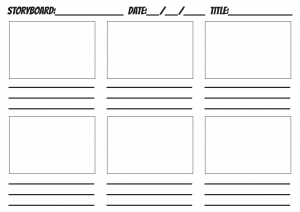
This will become the basis of your recount. So try not to make it too complicated. If you have lots on your list. Choose your favourite things that you experienced on your walk.
Your final box should be you going home.


Maths

Year 1: https://www.bbc.co.uk/bitesize/articles/zkrf382

Reception:

Today I would love for you to have a go at making some clapping patterns. 

Have the children make up their own clapping patterns too! It doesn’t just have to be clapping, you can use your whole bodies!

Extra activities

Because we are probably going to be inside today, I have found a fantastic list of fun activities for your children to play inside. They might be a bit boisterous because we haven’t had weather like this for a little while!

If you do get a chance to go out (even with raincoats and wellies!) have a go at making a boggart! This is a face in a tree! You can use anything you find in nature to create one. Here are some examples:

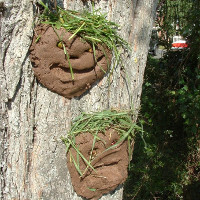


If you want to make one at home, you can use this playdough recipe.

Then you can just add pieces of nature!  A boggart is a hairy, smelly  creature often found in marshes, holes, caves and bogs. Sometimes, if a boggart goes for a wild wander it might get into your house and then there’s trouble! It will make things disappear and turn the milk sour and it’ll pull your bed sheets off you at night. The boggart will get bored and eventually move on. They are funny little woodland creatures that always live in the forest! You can scare them off by making a Boggart’s face!

Have fun!


CEOP
Parent View - Give Ofsted your view on your child's school
© Holy Trinity CE Primary Academy and Nursery 2026
Shropshire web design by kiskadoo