English Home Learning 23rd June 2020

Enjoying Reading

An author chooses everything about a book:

  • where it is set
  • what happens
  • who the characters are
  • what those characters are like

This is called authorial intent.

Authors also think hard about what they want their readers to feel when they are reading their books.

When someone reads a book and really likes it, they often read other books by the same author. This is because they enjoy how that author writes and how that author makes them feel.

For example: Lots of people enjoy reading Roald Dahl’s books because they know they’re usually funny, have interesting characters and will be written in a way that makes them feel happy.

Visit the BBC Bitesize page to see the videos and activities.

Maths Home Learning 23rd June 2020

Comparing Angles

An angle is the space between two lines that start at the same point.

We measure angles in degrees. The degree symbol looks like this °. We show it next to a number like this 90°.

Types of angles

Angles can be between 0° and 360° (which is a full circle) and depending on the size of the angle, they are called different things:

A right angle looks like the corner of a square or the edge of a book.

It is a perfect 90°, which is often shown by a small square drawn in between the two lines.

A right angle

An acute angle is an angles that is less than 90°. This makes them smaller than a right angle.

A good way to remember this angle is to think that because it is small, it is “a cute” angle.

acute angle

An obtuse angle is an angle that is bigger than 90° degrees, but doesn’t reach a straight line at 180°.

obtuse angle

When you compare two angles, you have to think to yourself, is it smaller or bigger than 90°?

Example 1:

Look at this shape, known as a quadrilateral (a four-sided, two-dimensional shape).

Angle A is a right angle.

quadrilateral

Which angles are acute angles?

Look carefully at the other angles and compare them to the right angle. Which angles are smaller?

  • B and D are acute angles because they’re clearly smaller than a right angle.

  • That means angle C is an obtuse angle because it is larger than angle A.

Example 2:

Are any of the angles below obtuse?

Angles labelled A, B, C and D

Compare each angle to a right angle again – which are bigger than 90°?

  • A and D are obtuse since they’re clearly larger than a right angle.

  • B and C are acute angles then.

Visit the BBC Bitesize website to see the videos and activities.


Tuesday – Spelling day! Home learning for Hawkstone and Stiperstones.

Good morning Everyone.

I hope you enjoyed the start to planning your theme park.

It’s all about the brochure today!  Brochure Template

Theme Park Presentation Lesson 2

Spellings Cursive Handwriting Practice Sheet        Word Search

Maths – https://kids.classroomsecrets.co.uk/resource/percentages-as-fractions-and-decimals-video-tutorial/

https://classroomsecrets.co.uk/category/maths/year-5/spring-block-3-decimals-and-percentages/step-9-spring-block-3-dec

https://free-secret-resources.s3-eu-west-1.amazonaws.com/Year-5-Understand-Percentages-Worksheet.pdf

Have a great day Everyone! Can’t wait to see your brochures!!!!

Tuesday Literacy

Watch this video with your child and encourage them to join in.

Now, please practise reading the tricky words with your child. Ask them to write some words too. Select some that they can write easily and some that are more of a challenge.


Today I’d like you to look at these funny pictures!


Please discuss them with your child and ask them to write some sentences about them. Remind them about capital letters, full stops, finger spaces and tricky words. Your child will find it easier to write on lined paper if you have any or if you could use a ruler to draw lines for them to write on that would help.

Additional Ideas – Summer Fun

Here are some links to summer activities. The first is a link to beach themed interactive jigsaw puzzles on cbeebies.

https://www.bbc.co.uk/games/embed/glj6hrsbz3?exitGameUrl=https%3A%2F%2Fwww.bbc.co.uk%2Fcbeebies%2Fpuzzles%2Fsummer-jigsaw%3Fcollection%3Dget-active

Here is a link to a seaside song to join in with!

https://www.bbc.co.uk/cbeebies/watch/showmeshowme-beside-the-seaside-song 

Here is a link to Something Special. Mr Tumble is playing outside in his garden!

https://www.bbc.co.uk/cbeebies/watch/something-special-playing-outside


Tuesday Maths

Today I’d like your child to do some careful counting.


Look at this summer themed picture.

Can your child carefully count and write the number of objects. Here is a checklist of objects to count. The numbers can just be written on a sheet of paper – perhaps your child could draw one of each object and then write the number.

There is no need to print the sheets but if you are able to, here is the link.

I Spy summer

I spy summer checklist

English Home Learning 22 June 2020

Reading and Understanding Texts

When you read a text and show you understand it by answering questions, this is called comprehension.

Clip Art of the Reading Children free image

You use comprehension skills all the time in everyday life. For example, when you work out what a sign means, watch a film or listen to a podcast.

You often need to link together facts and clues to properly comprehend (understand) what’s happening in a text.

Here is a simple example of a comprehension question that you might find in an English lesson.

Tommy is wearing a grey jumper, round glasses and a blue hat.

Question: What colour hat is Tommy wearing?

If you can give the answer ‘Tommy is wearing a blue hat’, you have used your comprehension skills and shown you have understood the sentence correctly.

Comprehension becomes more challenging when the text is longer because you need to link together more facts and clues to understand what’s happening.

You have to be an active reader. This means you need to be thinking about what you are reading, as you are reading it.

Man with round glasses,a blue hat and a grey jumper
Visit the BBC Bitesize Bitesize page to see the videos and activities.

Home Learning – 22nd June

Good Morning and what an absolutely stunning morning it is! I hope we are all excited, pumped and ready to do lots and lots of learning this week!

Don’t forget, every piece of work gains you a Dojo! I will will keeping score and awarding those who try their hardest! I won’t give out Dojos if I don’t think it’s your best work so try your hardest please!

English

Today we are going to listen to the story of Hansel and Gretel. Story PowerPoint.

Use the PowerPoint to read the story. I have added “STOP” points. At these points, I would like you to write down one sentence saying what you think will happen next.

Reception – focus on the language that they are using, ensure they are using super sentences! (For example: I think that … )

Use your imagination!

Maths:

Year 1: https://www.bbc.co.uk/bitesize/articles/z2xfxbk 

Today it is learning to count to 100 –  I think we can all do this because we love this song:

Feel free to sing it – we do 100 jumps when we sing it in class. It really get’s their blood pumping! (Reception can do this too!)

Reception:

This week we are learning all about doubles!

Today’s Maths lesson is so much fun! I would like you to watch this episode of numberblocks! It is Season 2 Episode 9 – Double Trouble.

It introduces the children to doubles in in a fun way! 

Once you’ve watched the show, have a conversation about how we work out doubles. Use your hands to match the doubles (for example 1 and 1)

You can listen to this amazing song and try and learn the words:

Extra activity

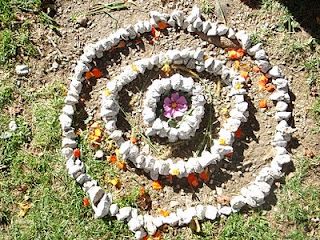
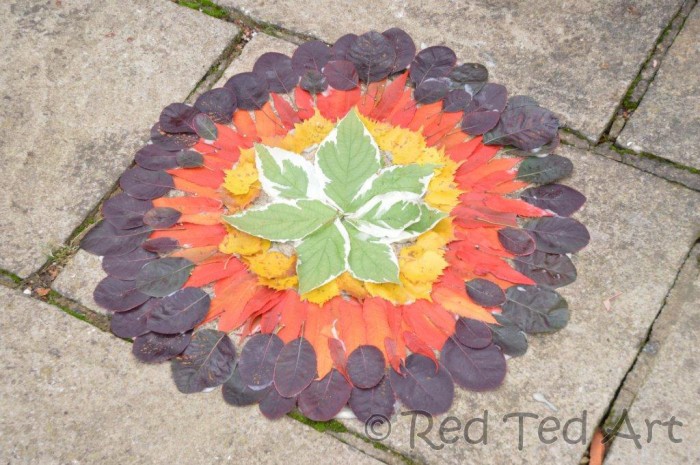
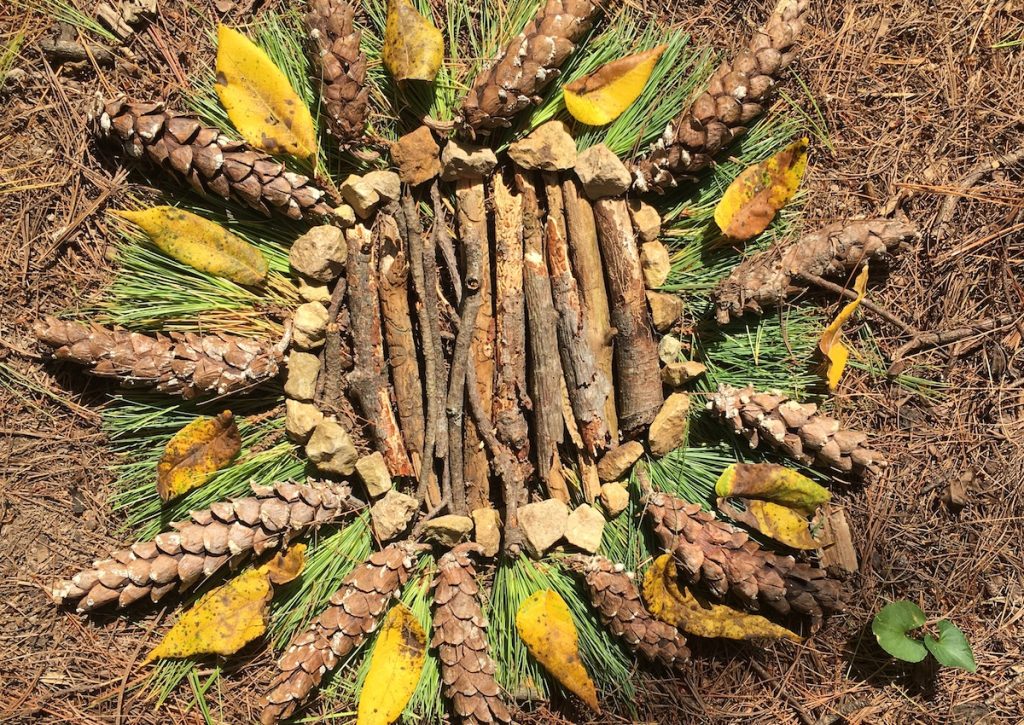
Today I would like you to have a go at creating a piece of art inspired by an artist called Andy Goldworthy. He is a Sculptor and artist from Cheshire. He creates all of his art with natural materials. If you would like to learn a bit more about Andy Goldworthy here is some more information: t-ad-225-ks1-all-about-andy-goldsworthy-powerpoint_ver_1

Here are a few examples of work created by other children:


Have an amazing day and work super hard! Keep an eye on your Dojo points!

Maths Home Learning 22 June 2020

Turns and angles

We are now onto a new topic, Geometry!

Today we are looking at turns and angles.

Angles are all around us. An angle is created when two straight lines meet.

Look at the picture below. Two of the pairs of pencils show angles, can you work out which ones?

an arrangement of pencil

If your answer was the pair on the left and the pair on the right, then you are correct. The pair in the middle does not show an angle because the lines do not touch.

The picture below shows a right angle. This is a special type of angle that is a quarter of a full turn.

Right angle

You can check whether an angle is a right angle by using a set square, like in the picture below.

pencils arranged in a right angle, measured with a set square

Two right angles together make a half turn…

Half turn

So, three right angles make up three quarters of a full turn…

And four right angles make a full circle.

Full turn

Practise

Activity 1

Finding angles in your name

Write your full name in capital letters, like the examples opposite.

  • Highlight all of the right angles – how many are there?Lola James
  • Which capital letter has the most right-angles?

Repeat the activity with one of your friend’s names.

  • Does their name have more or fewer right angles than yours?

Activity 2

Make your own right-angle checker

For this activity, you are going to make your own right-angle checker.

  1. Draw around a round object, such as a tin, to make a circle.
  2. Divide the circle into four equal sections, then cut one of these out, so it looks something like the image opposite.
  3. Finally, turn over your right-angle checker and decorate it however you like – why not add an eye and some teeth?

You now have your very own right-angle checker . Go on a hunt around your house and see how many right-angles you can find. The pictures below give you some good ideas!

Send me pictures of your activities so I can give you Dojo Points!

Challenge

Monday Home learning for Hawkstone and Stiperstones

Hi Everyone,

Hope you all had a lovely weekend.

Our topic this week is Theme Parks. We have some exciting projects for you.

Start by watching some of the rides here at Disney Florida.

Some of these rides could appear on your theme park.

The Maths and English themes are combined today. It will probably take you most of the day to get through this planning.  Have fun!!!

Theme Park Presentation Lesson 1 This Power point will help you plan the beginning of the design of your very own theme park. You will decide on a name for it and be given a budget.

Follow the instructions for your first draft plan.First Draft Map Activity Sheet

Keep a running cost of your budget in these notes.Building a Budget Activity Sheet theme-park-notes (3)


CEOP
Parent View - Give Ofsted your view on your child's school
© Holy Trinity CE Primary Academy and Nursery 2026
Shropshire web design by kiskadoo