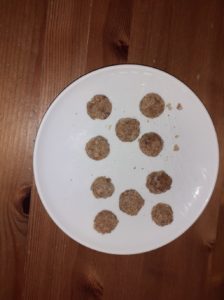
Monday Home Learning (week 2)

Good morning everyone!

I hope you have had a lovely and restful weekend.

Today’s home learning task is a Maths activity. Before we closed, we were working on number bonds to 10. These are vital number facts for children. By the end of Year 1 your child should be able to recall most number bonds to 10.

Year 1 were using number bonds to 10 to work out the number bonds to 20. So for example we know the 2 + 8 = 10 so therefore 12 + 8 = 20. I would like Year 1 to have a go at completing this work sheet: Number bonds to 20. If you can’t download it, you can copy the numbers as a “part part whole” model like this: 

In Reception we were starting to work through them practically using resources. So I would like you to get 10 items (they can be anything – teddies, pencils, beads). Then find out as many ways as you can to make ten. Cheeky Challenge: try writing them out as a number sentence with your neatest numbers.

I understand that these are quite tricky tasks! So if your child is getting stressed or is finding it too difficult, take a break and read a book on Bug Club. Come back to it later. The novelty of home learning will probably wear off for them soon so it might get harder. The fact that your family is having a go at home learning is incredible and you should be proud of that. I will endeavour to plan super exciting and engaging tasks for the rest of the week!

Have fun and know that I am so proud of everything that has been sent to me so far! Mrs Lewis’ socks would be flying across the room by now!

Science Week Poster Competition Update!

Dear ParentsSee the source image

Your children will have come home with a poster competition for British Science Week . We still want them to participate in this competition. We would love you to send their entries on anything linked to the topic – Our Diverse Planet – via photograph into class teachers by email or Class Dojo. We will hold our own Holy Trinity Competition. However, as well as this, you can also email your entries electronically to the link below.

Poster competition – British Science Week – Our Diverse Planet
https://www.britishscienceweek.org/plan-your-activities/poster-competition

Poster competition
We can’t wait to see your entries.

Have fun


A few more ideas….

Here are a few more ideas to engage your children!

This photo shows the lines and numbers drawn with a whiteboard pen on a mirror. However the activity can easily be done using paper and pens. If you have a safe outside space you could chalk the lines and numbers onto the ground. Any small items can be counted out. If working outside (in your own garden, away from other people) the children could count out leaves or stones.


The children love to use cotton buds and paint to trace over letters and numbers. You could also practise their names (first name and surname) using this method. If you don’t mind getting messy, they could use finger tips to paint instead of cotton buds! If you do not have paint, children could use felt pens or cotton buds dipped in water.

If you have some coins you could ask the children to sort them into different groups. You could talk about the numbers on each coin. Discuss the shapes, sizes and colours of the coins too. Please remind your child to wash their hands after handling money.

This activity would be best if you have your own garden. You will know that only your family has touched the leaves. Leaves can be threaded onto string or wool. You could collect small sticks and thread the leaves onto these. Cotton buds or drinking straws could also be used. Challenge your child to thread a certain number of leaves!

Again an activity safest done within your own garden of you have one. If you don’t have chalks, sometimes stones will leave a similar mark on the ground.

Please encourage your child to wash their hands thoroughly after completing activities. They have been shown how to do this in class and taught a song to help them. If you do go outside, please use your own space and stay away from other people. This is the safest option for your family and other members of the community.

Friday 27th March Home Learning

I hope you are all enjoying creating your Charybdis on PurpleMash and writing your own myth including that monster!

Make sure to keep practising your times tables, you can use these fun games to practise them. Remember to challenge yourself!

In year 3 we should know our 2, 5 and 10 times tables. We should be practising our 3, 4, and 8 times tables.

Grab a piece of paper and a pencil and write the numbers 1 to 10 down the side. Play the Daily 10 game and see how many you get right!

https://www.topmarks.co.uk/maths-games/daily10 

If you want to see how fast you are try the game below! Send me a picture to prove your score!

https://www.topmarks.co.uk/maths-games/hit-the-button

There are lots of multiplication and division acitvities in the home packs you were given if you would like to have a go at these.

I look forward to seeing your successes!

Mr Hughes

Friday’s Challenge

Good morning,
I’ve been thinking about today and I’d like you to do something together with people you live with. It could be bake a cake, make pizzas, build a den, create a Lego masterpiece, have a tower challenge to see who can build the tallest tower (safely!) But today is all about talking, listening and working together which is a great skill to have. Enjoy this sunny Friday and enjoy working together.
I will award Mathletics certificates on Monday morning in case any of you go on over the weekend (you don’t have to, I know that some of you like to win!!)
Have a great day and keep posting your work, I love hearing from you all 🙂

Recipe ideas –

https://www.bbc.co.uk/cbbc/shows/junior-bake-off

https://www.bbcgoodfood.com/recipes/collection/kids-cake

Kids' cakes recipes | BBC Good Food

25 Ways to Build Towers Without Blocks | Hands On As We Grow®

the edge of the explosion* — Greetings! from the Blanket forts ...

Friday Maths

Halving

Please share this story with your child and let them look at the pictures. At the end of the story is an activity I’d like them to do.

Here are Ted and Pup. They are usually best friends.
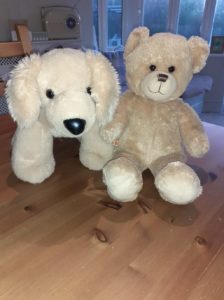
They haven’t been very good friends recently. They keep arguing with each other. They are not very good at sharing. Earlier they had bananas to eat. This is what happened.
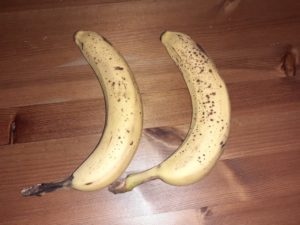
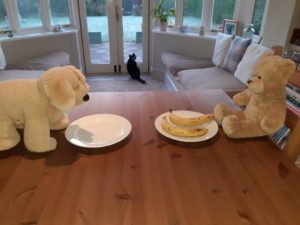
There were 2 bananas. Ted put them both on his plate. Pup had no bananas. Is this fair? What should they do? I had to tell them about sharing. They needed to have half each. This means they both have the same.
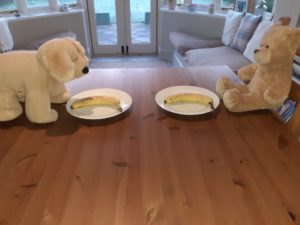
They shared the bananas. They both had half. Ted had 1 banana and Pup had 1 banana. Half of 2 is 1.

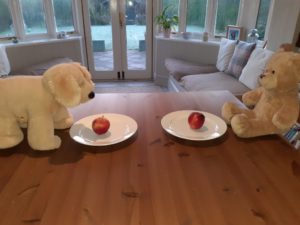
Then they had apples. This is what happened.
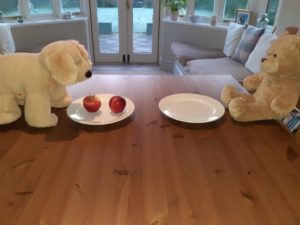
Now Pup had 2 apples. Ted had none. Ted had zero apples. Is this fair? What should they do? I reminded them to share. They needed to have half of the apples each. Half of 2 is 1. They worked together to share the apples.
They were still hungry so they decided to have some oranges. How can they share 4 oranges so that they have half each? They both need the same number of oranges on their plate.
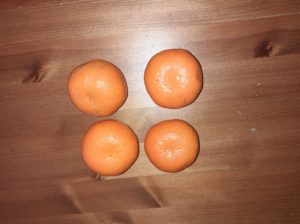
If Ted has 4 oranges and Pup has 0, is that fair? If Pup has 3 oranges and Ted has 1, is that half each? No! They worked together to share the oranges and had half each.
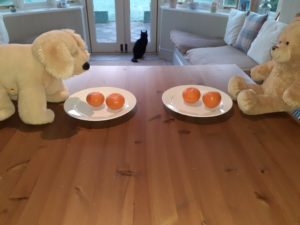
Pup had 2 oranges and Ted had 2 oranges. Half of 4 is 2.

They decided the best thing to do was to share everything fairly so that they always have half each. They put strawberries on a plate. How many strawberries are there?
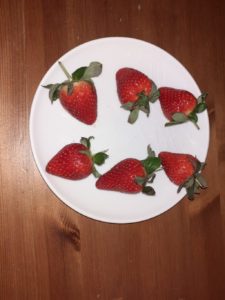
They put the plate between them and then shared them so they had half each.
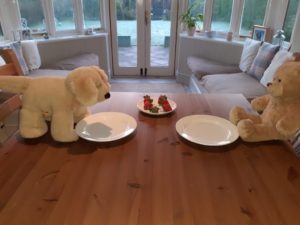
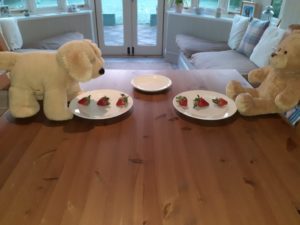
    

There were 6 strawberries. They shared them so they had 3 each. That was fair. They both had the same number of strawberries. Half of 6 is 3.

All day they worked together to share their food. They shared biscuits, tomatoes and breakfast cereal. They always made sure they shared fairly and had half each. Half means exactly the same on both plates.
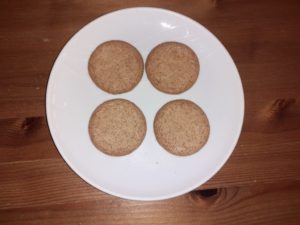
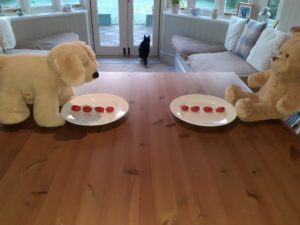
Now that Ted and Pup know how to share their food so they have half each they have stopped arguing and are much happier!

Activity

Ask your child to collect two soft toys and two plates. Collect a number of different foods or toys that your child can share between the two plates. Start by giving your child two items that are the same (2 bananas, apples, toy cars etc) Ask them to share the items so there are half on each plate. Remind them half means that there is the same on both plates. Repeat with two items, then increase to sharing 4 items, 6, 8 and then 10 items. Keep reinforcing the fact that both plates need the same number of items on them. Once the items have been shared correctly reinforce by saying ‘half of 2 is 1’ or ‘half of 6 is 3’

If you want to extend this activity you could use the frame from yesterday.
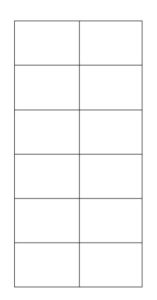
Write the number of objects given to your child on the sheet. They share the objects and then they write what half is onto the frame. The completed frame will look like this.
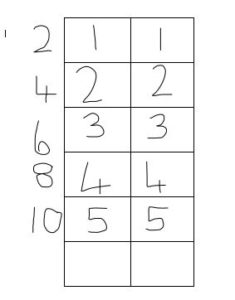
This is an activity the children can continue independently throughout the day. It is also something you could use with them at meal times or when they are playing with siblings. If your child has got playdough they could make cakes to share between the toys. They could make a playdough birthday cake for each toy and share candles between the cakes so they have half each. The important point they need to learn is that if they are sharing items so each person/toy has half, both must have the same. Some children may make the link between halving and doubling. For example they might spot by looking at the completed sheet that half of 10 is 5, and that double 5 is 10. If they notice this reinforce it throughout the activity.


Friday Home Learning

Good morning everyone!

What a beautiful beautiful morning it is! Well done to every one who has been completing the daily tasks. I have been so impressed with all of your work! A special well done to Kaden and Leyton who completed all of their assigned Mathletics activities!

Today I would love to see some amazing sentences! In Year 1, we have been working on using finger spaces, full stops and capital letters. Reception have been working on “holding a sentence” in their head, then sounding out each word and writing it with finger spaces.

I would like you to create a piece of Art. This can be anything: you can build a model; you can paint a picture; you can sketch something. ANYTHING! If it’s linked with a farm – even better!

Once you’ve made your artwork, I would like you to write a description. Year 1 should write at least 3 sentences using adjectives, full stops, capital letters and finger spaces.

Reception depends on their confidence. If you feel like your child is able to write more than one sentence, please encourage them to do so.

Please can Year 1 also complete their Spell Check and send me the results.

Have an amazing day!

Friday Literacy

Good Morning!

Here is the Literacy work for Friday. I am attaching a sheet with some writing frames on it. I have also put each sheet on here as a photograph so those unable to print off the sheet can see it. I’d like the children to look at each picture. I’d like them to sound out (use Fred Talk) to say each word and then carefully write each sound in a box under the picture. If you cannot print the sheet use the photographs here and write the words on a piece of paper. The words do get harder so you may need to help your child to carefully say and hear all the sounds in the words towards the end of the activity. The ‘l’ sound in plug will be tricky to hear, as will the ‘r’ in frog. The bigger boxes are for the children to write ‘digraphs’ (when two letters are used to make one sound, for example ‘sh’ or ‘ch’) The children call these ‘special friends’

writing frames   This is the link if you are able to print off the sheets for your child.


Cheeky Challenge!!! Challenge your child to think of and write a sentence about some of these pictures. They could write ‘The mop is wet’ or ‘It is a big tree’ or any others they think of. Remind them about capital letters, finger spaces and full stops. I really would love to see their work so please photograph and email it to me.

Please share a story with your child today. Whilst reading, follow the words using your finger. Ask the children if they can spot any ‘red tricky’ words in the text or to look for specific letters, words or punctuation.

Thanks for your ongoing support and helping your child to continue their learning. If you have any questions or queries I will be happy to respond to them via email clee@holytrinitycepa.co.uk  


More ideas….

A few more ideas to help engage your child.

You are able to take a daily walk with your family (as long as you keep distanced from other members of the public). Before you go on your walk, write out the alphabet onto a piece of paper. Take a pencil out with you and play ‘Alphabet Hunt’ whilst you are walking. Your child might find some ants, or see an ambulance for ‘A’ and so on. This might take a while and so could be completed over a few days.

An easy recipe to make simple cupcakes

4oz/114g margarine

4oz/114g sugar

2 beaten eggs

4oz/114g self raising flour (for chocolate cupcakes use 3 oz/85g SR flour and 1oz/28g chocolate/cocoa powder)

Preheat oven to 200 degrees celcius

Blend the margarine and the sugar together until the mixture is yellow, light and fluffy.

Add one beaten egg and mix in.

Mix in a small amount of your flour.

Add the second beaten egg and mix in.

Stir in the rest of flour until all ingredients are combined. At this point you could add a few sultanas/raisins or chocolate chips if wanted.

Spoon into individual cupcake cases and put into oven. Check after 15 minutes. They usually take about 20 minutes.

We have made these cakes in reception class and the children have always really enjoyed helping to pour, measure and mix. It is a great opportunity to try something new with your child and develop your child’s language.

CEOP
Parent View - Give Ofsted your view on your child's school
© Holy Trinity CE Primary Academy and Nursery 2026
Shropshire web design by kiskadoo