Additional Ideas – Science/Geography

Create a daily weather chart with your child. It might look something like this…..

Tuesday Maths

Ted and Pup are playing another game today. They are challenging themselves to work on doubles. To start with, they sang the doubles song.

To play the game, Ted and Pup collected a washing up bowl filled with water, 20 pieces of dry pasta (or anything small that will not be damaged in water), number cards 1-10 faced down and some tongs (tweezers will work or even just fingers!)

They have put 20 pieces of pasta in a washing up bowl.

Ted Turned over a number card. He turned over number 3. He had to double this number. He worked out that 3 + 3 = 6. Double 3 is 6. He used the tongs to catch 6 pieces of pasta.

Then Pup had a go. He turned over the number card 2. He worked out that double 2 is 4. 2 + 2 = 4. He used tongs to catch 4 pieces of pasta.

Please play this game with your child. Ask them to turn over a number card, double the number and catch this many items out of the water. If your child is not confident with doubles up to double 10, only use the 1 – 5 number cards.

ADVANCE WARNING!

On Friday, the work set for maths will involve making a fruit salad with your child. Any fruit can be used!


Clee Home Learning Packs

I hope you are all well. There are new named home learning packs available in the reception area for those who require them. Many Thanks, Mrs Allcock

English Home Learning 8th June 2020

Mastering inverted commas

You have learnt about using inverted commas to show speech in previous lessons. Today you are going to practise using them independently in your writing.

Remember:

  • When you are writing, inverted commas (also called speech marks) go before and after any words that a character says (known as direct speech).

For example: “I’m hungry,” complained Goldilocks.

  • If another character replies, the rule is to use another set of inverted commas and put the new person speaking on a new line.

For example:

“There’s some porridge on the stove,” said her mum.

“But I’ve already had some porridge today!” exclaimed Goldilocks.

  • Any punctuation goes inside the inverted commas at the end of what the character is saying.

Have a look at the BBC Bitesize page to see the videos and activities.

Home Learning – 8th June

Good Morning!

This week we are going to be learning all about woodland animals!

English:

Today I would like you to pick your favourite woodland animal. Here is a picture of a few that you might find in a UK woodlands:
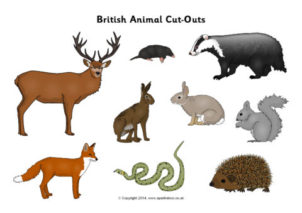
Britain / Europe Printables for Primary School - SparkleBox

Choose your favourite or one you don’t know anything about. Write a list of questions that you would like to find out the answer to! (Tomorrow you can do the research!) DOn’t forget to use a question mark!

Maths:

Year 1:  https://www.bbc.co.uk/bitesize/articles/z693rj6

Reception: Today you’re going to play a game. It’s called, “I count, you count”. Simply, you take turns saying each number. Start off by counting one number each starting at 1. Then have a go at some of these challenges:

  • Count two numbers at a time (12…34…56…)
  • Start at 5
  • Adult’s only mouth the numbers ( 1…2…3…4)
  • Start at 10

This get’s children really confident with counting forwards. It is also the building blocks for being able to “add on” rather than adding a total and counting from 1 every time.

Science

Do you know which animals live in the wild and which you can have as pets?

I would like you to have a go at sorting domestic and wild animals that live in the UK! Here is a lovely little video to get you talking about wild animals: https://www.youtube.com/watch?v=8vIrD13y8G0

So here are some sorting cards: Woodland Animals

If you don’t have a printer, just write the names on some small pieces of paper. Look at each card and decide whether it lives out in the wild or if it is someone’s pet! Or could it be both?!

Have a lovely day!


Maths Home Learning 8th June 2020

Equivalent fractions: drawing and discovering

Good morning!

In this lesson you are going to learn about equivalent fractions. Equivalent fractions are the same fraction written in different ways.

You will use fraction walls, number lines and bar models to find equivalent fractions.

This is an important skill for all the fraction work you will do in later years at school.

Equivalent fractions explained for primary-school parents | How to ...

The 3 fractions above are all equivalent. That means they are worth the same amount.

If you look at the amount that is coloured in blue it is all the same. The difference is how many parts it is made up of.

To see the videos and activities follow the link to the BBC Bitesize website.

Challenge

Monday 8th June – Stiperstones and Hawkstone Home Learning.

Morning Everyone – hope you have all head a lovely weekend.

What a great week of home learning we had last week. I will take a photograph of some of the lovely bubble art that Year 6 did last week today.

We also have some Bubble Maths Work following on from the fraction work last week. this work is not in your pack (Sorry – I only just found it as it links with all the work we have been doing.) Just complete all powerpoint questions by working through step by step. then complete Bubble bingo! We will do the remainder of this tomorrow. Lesson Plan Bubble Blast    Lesson Presentation Bubble Blast

English – today I would like you to continue your story. The next planning bubbles were: Where is your bubble going to take you? Your journey along the way? Describe your new setting. where are you? What can you see? Do you meet anyone?

Have a look at what activity you would like to choose and send it to me for Mrs Thomstone please.

Additional Ideas – We’re Going on a Bear Hunt

This week the additional work is linked to the story ‘We’re going on a Bear Hunt’ by Michael Rosen. Watch the story  here.

Monday – Make a list of things you would need to take with you if you and your family were going on a similar adventure

Tuesday – Draw a picture of the bear and write the words from the story to describe him around the outside. (Two big goggly eyes, two furry ears, one shiny nose etc.)

Wednesday – Imagine and write another page for the story. What other hurdle might the family encounter? How will they get through it?

Thursday – Talk about the story and the prepositions in it (over, through and under). Create an obstacle course where you have to go over, through and under.

Friday – Join in with this cosmic kids yoga linked to the story.

Monday Additional Ideas – Science

Gather together a selection of objects that are different textures and have different properties. Collect things that are hard, soft, rough, smooth, shiny, see through, bumpy and so on. Allow your child to explore the objects and discuss what they look and feel like.

Play I spy with the objects, for example “I spy something bumpy”

Challenge your child to a scavenger hunt – ask them to find something in your home or garden that is smooth, bumpy, rough and so on.

Play a blindfold game with your child. Use a scarf to cover your child’s eyes. Give them a textured object to feel. Ask them to describe the texture and guess the object.

CEOP
Parent View - Give Ofsted your view on your child's school
© Holy Trinity CE Primary Academy and Nursery 2026
Shropshire web design by kiskadoo